
Last updated November 21, 2026
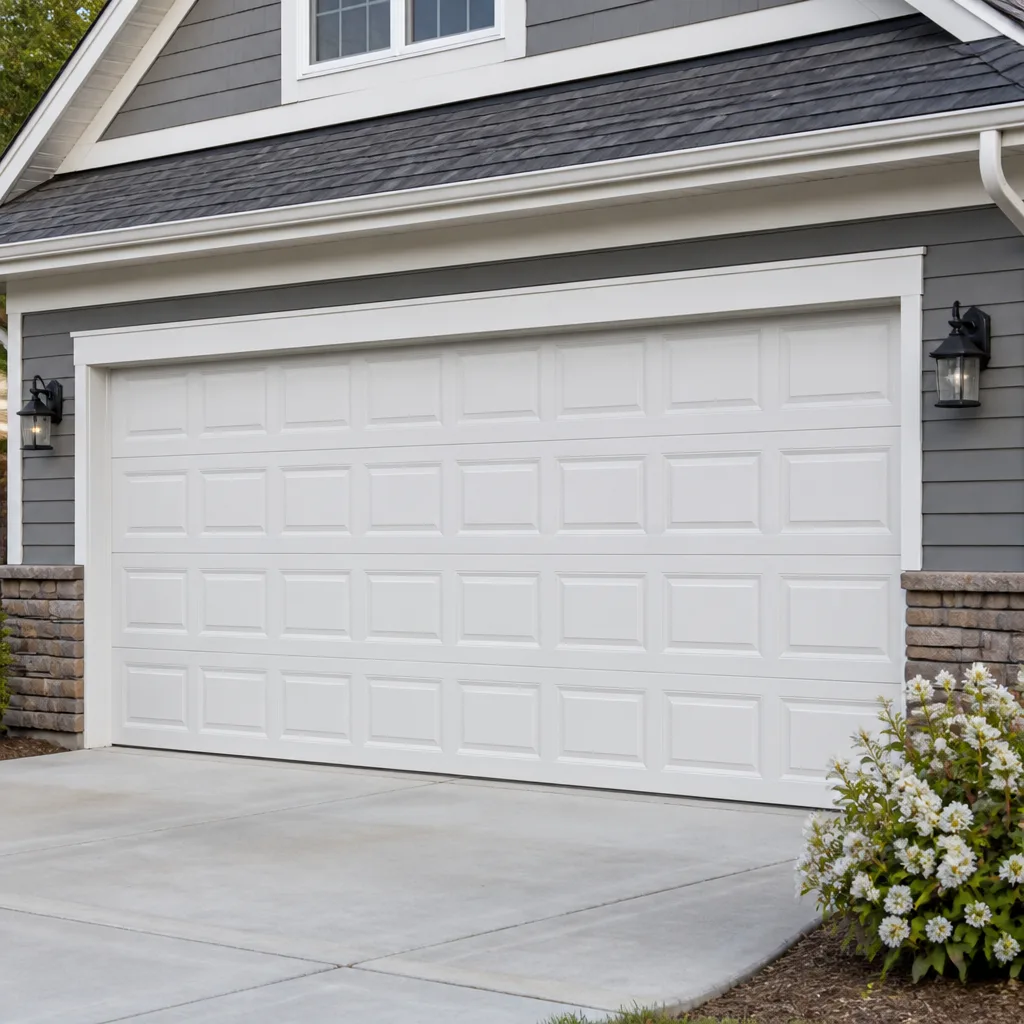 Raised-panel steel
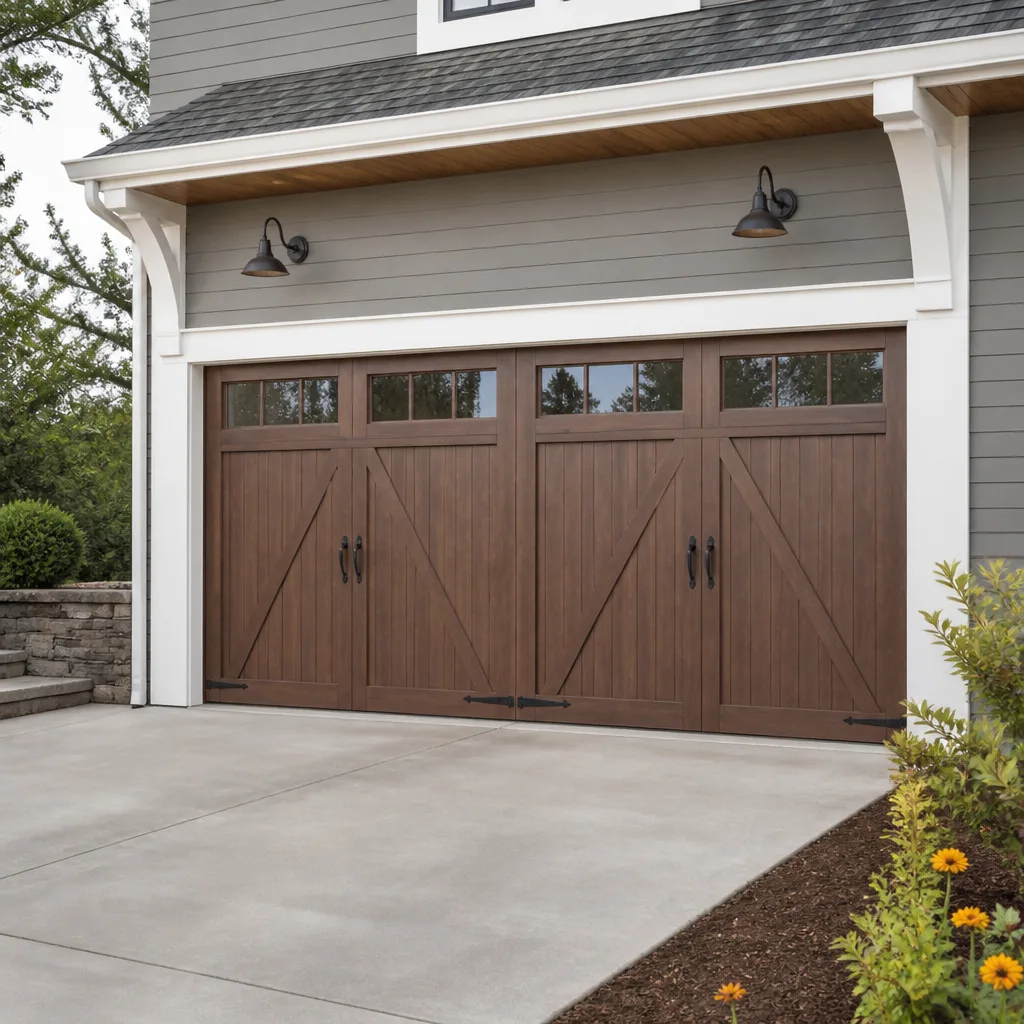 Carriage house
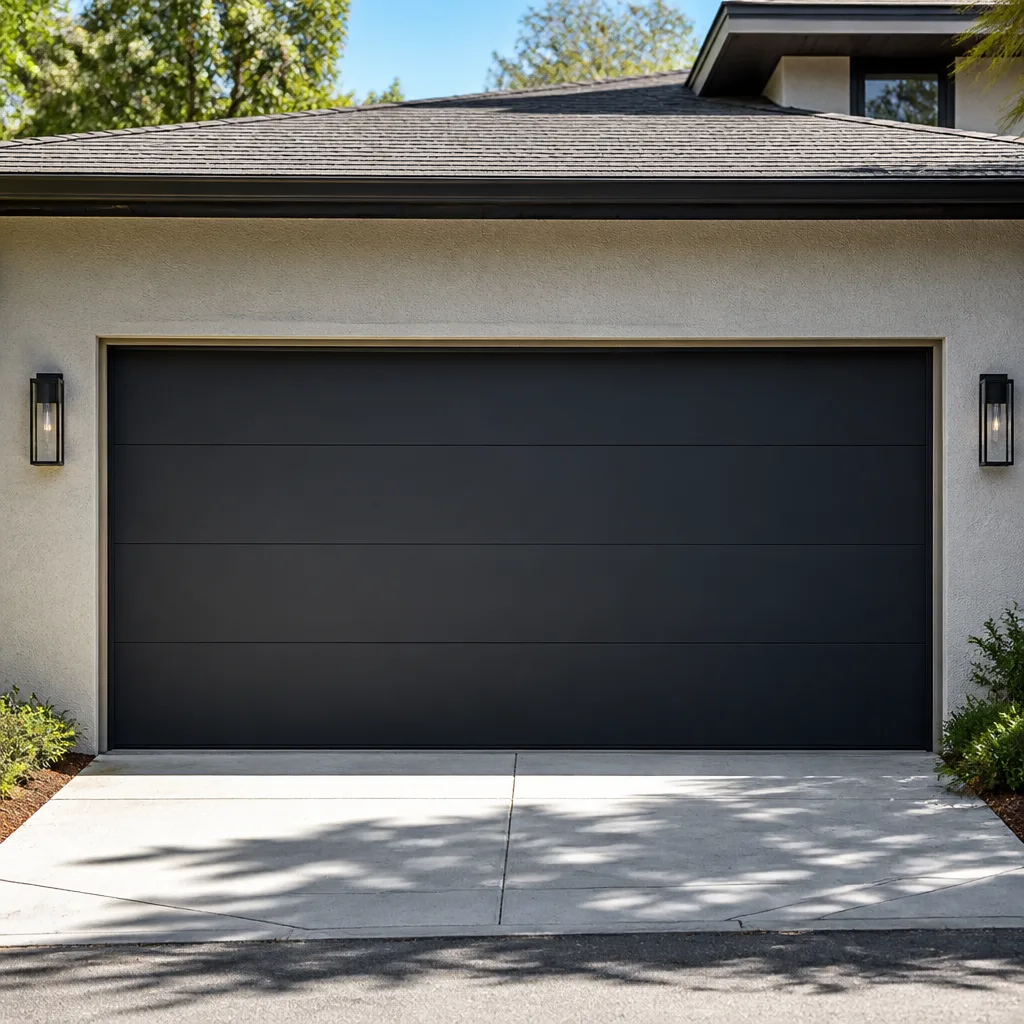 Modern flush
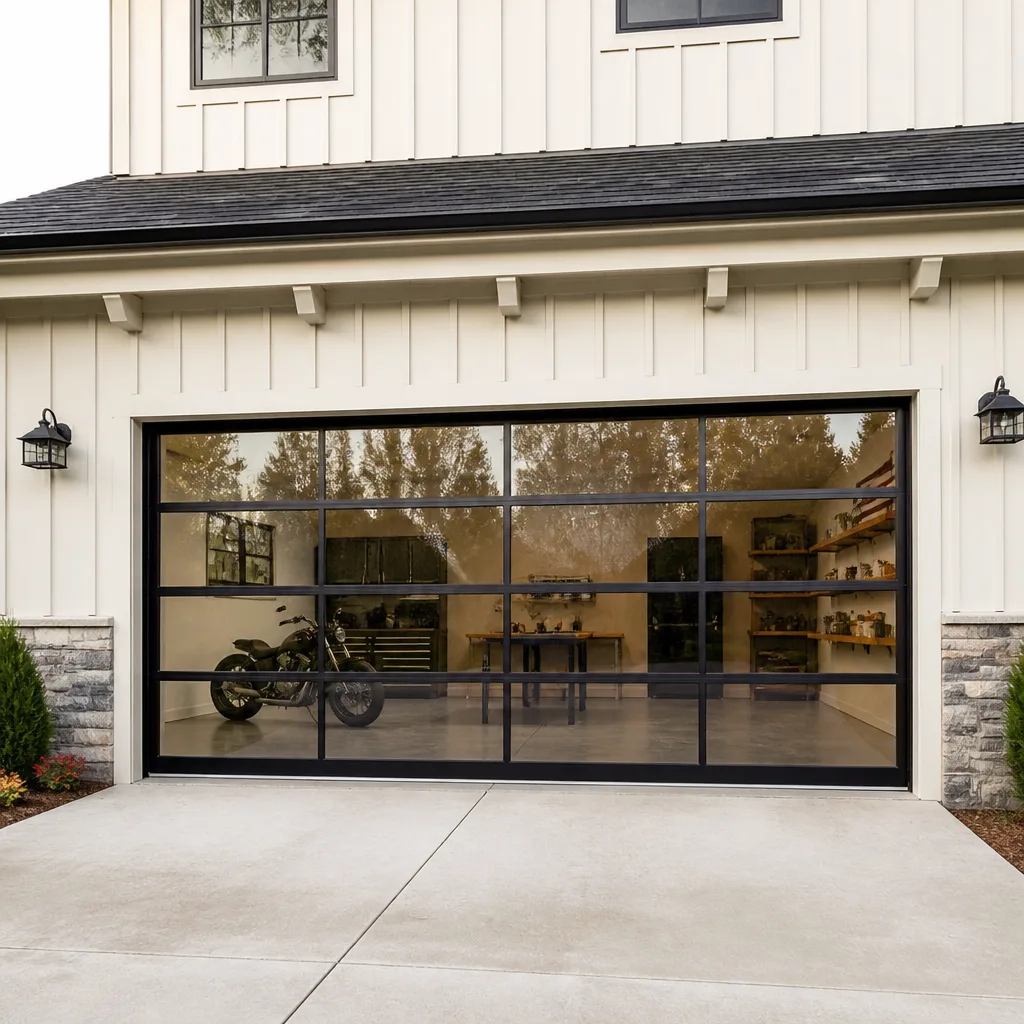 Full-view glass
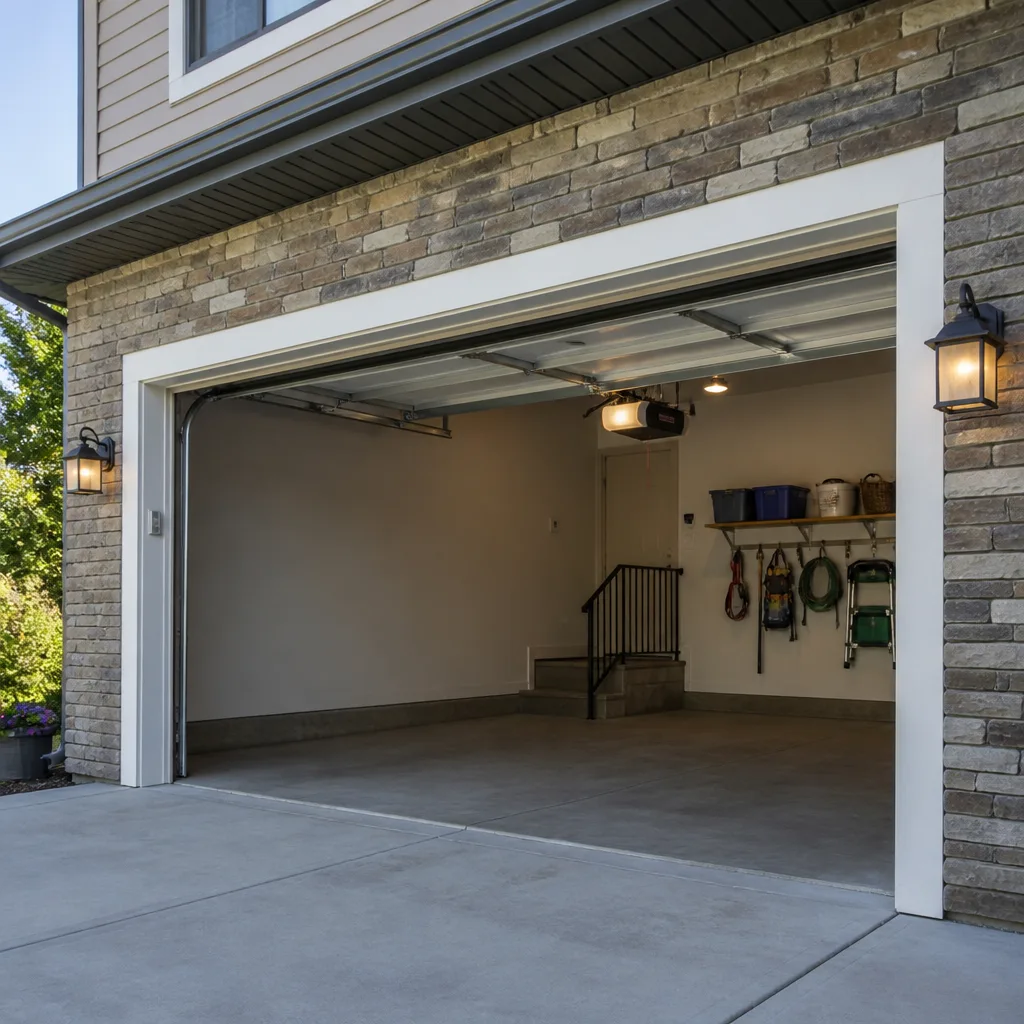 LiftMaster openers
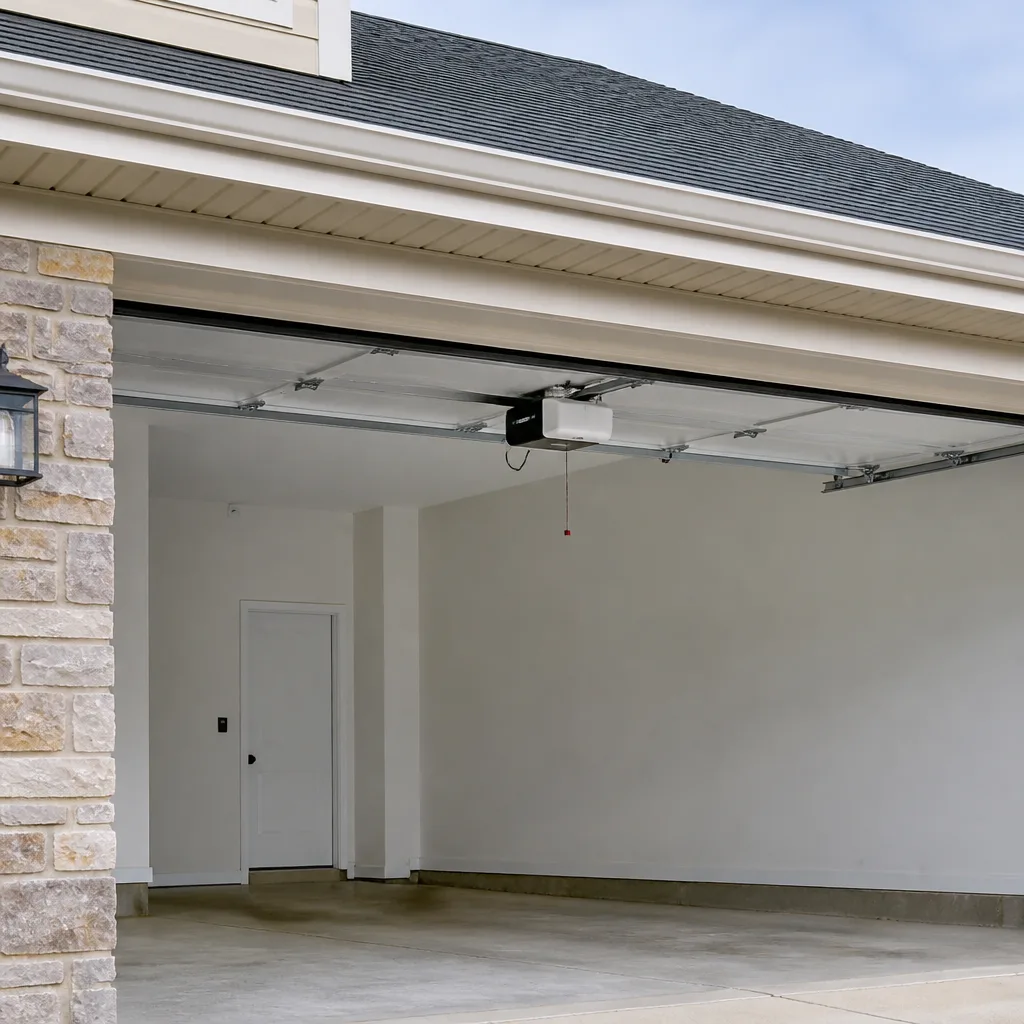 Chamberlain openers
Full 25-point door and opener safety check with every visit - springs, cables, rollers, tracks, and your LiftMaster or Chamberlain opener included
You get a price before we start. It does not change when the pro arrives.
Get your free estimateGarage Door Cost Breakdown: The East Village Homeowner’s Reference for 2026
A quote that comes in 30% above a national online estimate doesn’t automatically mean you’re being overcharged. It means you need to check whether that estimate accounts for the same job. A national calculator assumes a suburban driveway, a wide-open garage, a standard 8-foot door, and a technician who can park at the curb. An East Village job often means a narrow walk-up, a tight alley, a low-clearance ceiling, or a shared building entrance with its own access rules. None of that is padding. It’s the job. This reference walks you through where the money actually goes on garage door work in East Village, line by line, so you can read any quote – ours or anyone else’s – and know what you’re looking at.
Quick Answer
Garage door repair in East Village typically runs from about $150 for a minor adjustment up to $900 or more for a serious opener or panel replacement, with spring replacement, cable work, and opener repair clustering in the $200-$600 range. Installation of a new door usually lands between $900 and $2,500 depending on door size, material, and whether the opening needs low-headroom hardware. The exact price is set by a written, itemized estimate before any work starts – and that estimate is free.
Styles & brands we work with
- Raised-panel steel
- Carriage house
- Modern flush
- Full-view glass
- LiftMaster openers
- Chamberlain openers
Table of Contents
- Why Garage Door Work Costs More in East Village Than a National Average
- Component-by-Component Cost Ranges for 2026
- How Brand Affects the Price (LiftMaster, Chamberlain, Genie, Clopay)
- Hidden Cost Drivers Specific to East Village
- How to Read a Garage Door Quote Line by Line
- Repair or Replace? The Math That Actually Matters
- The Real Cost of a DIY Attempt That Goes Wrong
- When to Call a Professional
Why Garage Door Work Costs More in East Village Than a National Average
Labor in New York City costs more than in most of the country, and garage door work is no exception. But the gap isn’t only about wages. It’s about what a technician has to physically do to get the job done in a dense urban neighborhood like East Village. Three things stack up.
First, access overhead. A technician working a suburban job pulls into a driveway and has the door in front of them in ten seconds. In East Village, the same technician might be carrying tools up two flights, working from a narrow alley, or coordinating with a building super to open a shared garage entrance so the work can begin. That time is real time, and it’s part of what a fair estimate reflects.
Second, insurance and licensing overhead. Any garage door professional working legally in New York State carries liability coverage and operates under the licensing structure their trade requires. That costs more here than in a low-regulation market. When you see a quote that’s suspiciously cheap in East Village, ask whether the person quoting it carries insurance – the answer often explains the price.
Third, technical complexity. A lot of East Village garages weren’t designed as garages. They were converted from carriage houses, delivery bays, or basement storage, and that history shows up in the door system. Low-headroom situations, non-standard opening widths, and aftermarket torsion setups that were fitted to an old structure all take more diagnostic time than a factory-standard install. Complex jobs cost more because they take more skill – not because the neighborhood has a “city tax.”
What you should take from all of this: a higher-than-average quote in East Village isn’t automatically a red flag. A quote that doesn’t explain which of these factors applies to your job is. If you want a second read on a quote, that’s what our garage door repair estimates are for – the estimate is free and it’s itemized.
Component-by-Component Cost Ranges for 2026
Here’s the useful part: a line-by-line view of what each piece of garage door work typically costs in East Village in 2026. These are estimated ranges, not fixed prices. The written estimate on your specific job sets the final number. But if you’re comparing two quotes, this table is the reference point.
| Component or Service | Typical Estimated Range |
|---|---|
| Torsion or extension spring – one spring, replaced | $180 – $340 |
| Matched pair of springs (replaced together) | $360 – $680 |
| Cable replacement (per side) | $150 – $300 |
| Roller replacement (full set) | $120 – $250 |
| Track realignment or replacement | $180 – $450 |
| Panel replacement (per panel, standard) | $200 – $550 |
| Opener repair (board, motor, or sensor) | $180 – $420 |
| Opener replacement (belt or chain drive, installed) | $350 – $700 |
| New door installation – standard single door | $900 – $1,800 |
| New door installation – custom or low-headroom | $1,500 – $2,500+ |
A few notes on how to read this. Spring pricing in this range is for one spring. If your door uses a matched pair – and most modern torsion systems do – the pair is usually replaced together because a new spring pushing against a worn one wears both faster. So a pair costs about twice the single-spring figure. Any quote that gives you one number for “spring replacement” without telling you whether it covers one or both is a quote you should ask about.
The other thing worth understanding: these ranges hold across most of East Village, from the narrower blocks near Tompkins Square Park to the converted commercial spaces along the avenues, but the labor portion moves up or down with access. A job in a ground-level alley garage with clear clearance sits at the low end. A job in a multi-story building with an elevator to coordinate sits higher. For a full breakdown on openers specifically, our garage door opener repair page goes deeper. For a full-system view, start at Garage Door Repair East Village.
How Brand Affects the Price (LiftMaster, Chamberlain, Genie, Clopay)
Brand matters less than the underlying mechanism, but it does matter. A torsion spring is a torsion spring whether the door has a LiftMaster opener on it or a Genie. What changes between brands is the parts landscape and diagnostic time.
Openers made by LiftMaster and Chamberlain share a lot of internal architecture – they’re sister brands under the same parent – so a technician who knows one usually knows the other. That’s good news for repairs: parts are widely available and the diagnostic path is familiar. Genie openers, especially the older screw-drive models, take a slightly different diagnostic approach, but they’re still well within a specialist’s wheelhouse. Craftsman openers, still common in older East Village buildings, are essentially Chamberlain units with a different badge, so opener repair on a Craftsman unit follows the same logic.
On the door side, Clopay is one of the most common residential door manufacturers you’ll find in a typical East Village garage, alongside Amarr, Wayne Dalton, and Raynor. Panel replacement cost varies here because Clopay’s panel profiles and color lines don’t match Amarr’s, so a mismatched panel means either sourcing the exact match or replacing more panels than strictly necessary to keep the door looking consistent. That’s the kind of thing an estimate should call out explicitly.
What this means for your budget: if a technician works exclusively in one brand, they’ll often push that brand even when your existing system is fine. We work on the brand already in your garage – that’s the whole point of being a specialist rather than a single-brand installer. There’s no reason to swap a working LiftMaster for something new just because a repair tech only carries one label. Our technicians have up to 12 years of experience across these systems, and the brand conversation should always start with what you have, not what they’d like to sell.
For new door installations where you’re choosing a brand from scratch, our garage door installation page walks through the options in more detail.
Hidden Cost Drivers Specific to East Village
This is where most national cost guides fall apart. They assume a standard suburban garage opening and stop there. In East Village, the following factors can add cost to a job, and any honest estimate should tell you which ones apply to yours.
Low-headroom hardware
If the ceiling above your garage door is low, the door can’t use standard torsion or track hardware. It needs a low-headroom kit – a system that lets the door travel closer to the ceiling without the drop-down clearance a standard setup requires. On a new install, that kit is an add-on. On a repair, it means the parts on your door may be different from what a generic quote assumes, and diagnosing it takes more time.
Building access and elevator coordination
In a multi-story building with a garage on an upper level, or a door accessed through a shared service entrance, the technician’s work time includes access setup. If a super needs to be present, if a freight elevator is involved, or if the work has to happen during a scheduled building window, that’s real coordination cost. It’s not a markup. It’s a job that takes longer to run.
Non-standard opening widths
A lot of East Village garages were built for horse-drawn carriages or delivery trucks, not for a 2026 Camry. That means opening widths that don’t match the standard 8-foot, 9-foot, or 16-foot door sizes. A door built to fit an odd opening costs more than an off-the-shelf unit. Any estimate on a door this old should confirm the measurement before it quotes a price.
Alley and courtyard access
Doors accessed through a narrow alley, a courtyard, or a rear lot can mean the technician has to hand-carry tools and parts further than a typical job. This affects scheduling as much as cost, but it does affect both.
Older electrical and opener wiring
Opener installations in older buildings sometimes run into electrical work that wasn’t set up for a modern opener’s power requirements. If that’s the case, the electrical side might need a licensed electrician – which is a separate line item, not something we should ever quietly fold into the opener price.
Permit requirements
Most cities require a permit for structural garage door work – especially on new installations or anything that changes the opening. East Village is no exception, so if your job touches the structure, ask the city’s building department whether a permit is needed and what it costs. That’s a line item a quote should mention if it applies.
Every one of these drivers is real. But so is this: if a quote doesn’t say which of them applies and why, it’s padding. Our garage door repair estimates call them out by name. If your quote doesn’t, push back.
How to Read a Garage Door Quote Line by Line
This is the single most useful skill this guide can give you. A well-written garage door quote is a specific document, not a single number. Here’s what a good one looks like, and what to do when it doesn’t.
What a good quote itemizes
- Parts by name and brand. “Torsion spring, matched pair, 250×2.0” is a real line. “Springs” is not. The brand and specification of each part should be stated.
- Labor hours or flat labor. Either works, as long as it’s stated. “Two hours labor” is fine; “labor” on its own is not.
- Disposal or removal fees. If the old door, springs, or opener leave the site, that’s a line item.
- Access or coordination allowances. If elevator use or building coordination is part of the job, the estimate should say so and what it adds.
- Permit costs, if applicable. Listed separately, not folded into labor.
- The total, with a clear statement that this is the agreed price.
What flat-fee bundling is acceptable
Some jobs are legitimately priced as a bundle. A spring replacement that includes new cables and a full safety inspection, priced as one package, is fine – provided the package states what’s in it. When bundling is acceptable: when the bundled items are genuinely replaced together (springs + cables + rollers as a tune-up) and the estimate lists what’s inside the bundle. Bundling is not a way to hide an item you didn’t agree to pay for.
Vague line items to push back on
- “Miscellaneous hardware” with no dollar breakdown
- “Disposal” with no specific weight or item count
- “Service call” or “diagnostic” fees that appear in the itemization but weren’t in the original quote
- Any line that changes from the written quote to the final invoice
- Bundles that combine springs, opener, and door into one price with no component breakdown
One rule to carry with you into every East Village garage door conversation: the price is agreed before work begins. Not after. Not “we’ll see once we’re in there.” If a technician opens the door, finds something different than expected, and the number needs to change, they should stop and re-quote before doing the work. Any legitimate garage door specialist – full-system, eight-brand, whether repair or replacement – will do this without being asked.
Repair or Replace? The Math That Actually Matters
The question isn’t “does the door still work?” It’s “for how long, at what annual cost, and against what replacement number?” Here’s a simple framework for working through it in East Village.
Rule of thumb: if a repair costs more than half the price of a new door and the existing door is at or past the middle of its useful life, replacement usually wins on total cost. Below that threshold, repair usually wins. Above it, replacement usually wins. Middle of the road is where judgment matters, and that’s the point where an honest specialist should talk through both options rather than recommending whatever pays more.
Some specifics to weigh:
- Repairs that almost always make sense: a single spring replacement, a cable, a single panel, a sensor or opener motor. These are the system working as designed – parts wear out, and replacing them extends the life of everything around them.
- Repairs that often tip toward replacement: track and hardware replacement on a door whose panels are already dented or rusting; multiple panel replacements on a door past its middle years; an opener that’s failed on a door that also needs significant mechanical work.
- Jobs that almost always need replacement: a warped or sagging door that won’t close flush, panel damage across a wide area, an opener system so old it can’t be safely paired with new safety sensors.
We’ll tell you honestly whether to repair or replace. If a repair is the right call, we’ll say so even though a replacement would bill higher. If a replacement makes more sense, we’ll show you the math – expected remaining life, total cost of repeated repairs, and the cost of a new door – and let you decide. That’s the point of having repair and installation in the same service menu. The two aren’t competing. They inform each other.
The Real Cost of a DIY Attempt That Goes Wrong
There’s a reason garage door work is one of the few trades where even experienced contractors call a specialist. And that reason is worth understanding before you decide to try it yourself.
Torsion springs – the horizontal springs mounted above the door opening on most modern doors – are stored energy in the hundreds of pounds. If one lets go under load, it can cause serious injury. Extension springs are under similar tension. Cables carry that spring tension along the sides of the door. This isn’t a component to learn on. The reason spring repair is a named, dedicated service in our menu is that the work takes specific knowledge about load balancing, winding bars, and tension management, and getting any of that wrong is dangerous.
So what does a DIY attempt usually cost to correct? A few patterns we see in East Village:
- Cut spring, twisted door. Attempting a spring replacement without the right winding technique can leave the torsion tube bent and the door out of balance. Correction costs more than the original job because the door needs rebalancing, not just new springs.
- Opener wired wrong. A DIY opener install with reversed wiring or a poorly mounted travel limit can burn out the motor board, which means a full opener replacement instead of a repair.
- Panel damage from a mis-tensioned door. A door that’s out of balance pushes unevenly against its tracks. Over time, that bends panels – which means the “cheap” DIY fix ends with a door replacement.
- Safety sensor bypass. Disabling a safety sensor to get the door to close leaves a serious safety risk and, if anyone is hurt, a legal one.
There’s also the time angle. A professional spring replacement on a standard East Village door is a fast job. A DIY attempt that goes wrong can turn a Saturday afternoon into a week of waiting while a door sits stuck. In an emergency where the door is your only access to your car or to the street, that waiting has a cost too.
We’re not saying every homeowner needs a technician for every adjustment. If a roller is squeaking and you can safely oil it, oil it. But once the job touches springs, cables, or opener motors, the professional-first math usually wins. Even a professional correction that follows a failed DIY attempt typically costs less than the total of the DIY attempt plus the correction – and it skips the injury risk entirely. Our garage door repair team handles the full mechanical scope, springs through openers, so you’re not chasing two separate calls.
Common Mistakes to Avoid
- Accepting a one-line quote. If the estimate is a single number with no parts or labor breakdown, you can’t compare it to anything – and you can’t tell later whether the final invoice matches. Ask for an itemized version before you agree.
- Assuming a cheap quote is a good quote. In East Village, a quote that comes in well under the ranges in this guide is often missing something: no insurance, no permit, no disposal, or parts that won’t last. Ask what’s excluded before you compare totals.
- Skipping the “one or both springs” question. Most torsion systems use a matched pair. If a quote says “spring replacement” and you don’t know whether the price covers both, call and ask. This is the single most common confusion on garage door invoices.
- Not asking about building access costs up front. If your garage is behind a shared entrance, up an elevator, or in a multi-unit building, confirm whether the estimate includes the access time – before the technician arrives. Surprises here are avoidable.
- Signing off on “we’ll see when we get there” pricing. The price should be agreed before work starts, and if anything changes, the technician should stop and re-quote. Not every quote can account for a hidden problem – the point is what happens when one shows up.
- Trying a spring repair yourself. It’s the most frequently mishandled garage door repair for a reason: the stored energy in a torsion spring is dangerous, and the correction cost after a failed attempt often exceeds the cost of the professional job. Never learn this trade on your own door.
- Replacing an opener when only the sensor is bad. A door that won’t close is often a misaligned or dirty sensor, not a failed motor. Get a diagnosis before agreeing to an opener replacement – the fix might be a $180 sensor repair, not a $700 replacement.
See the difference
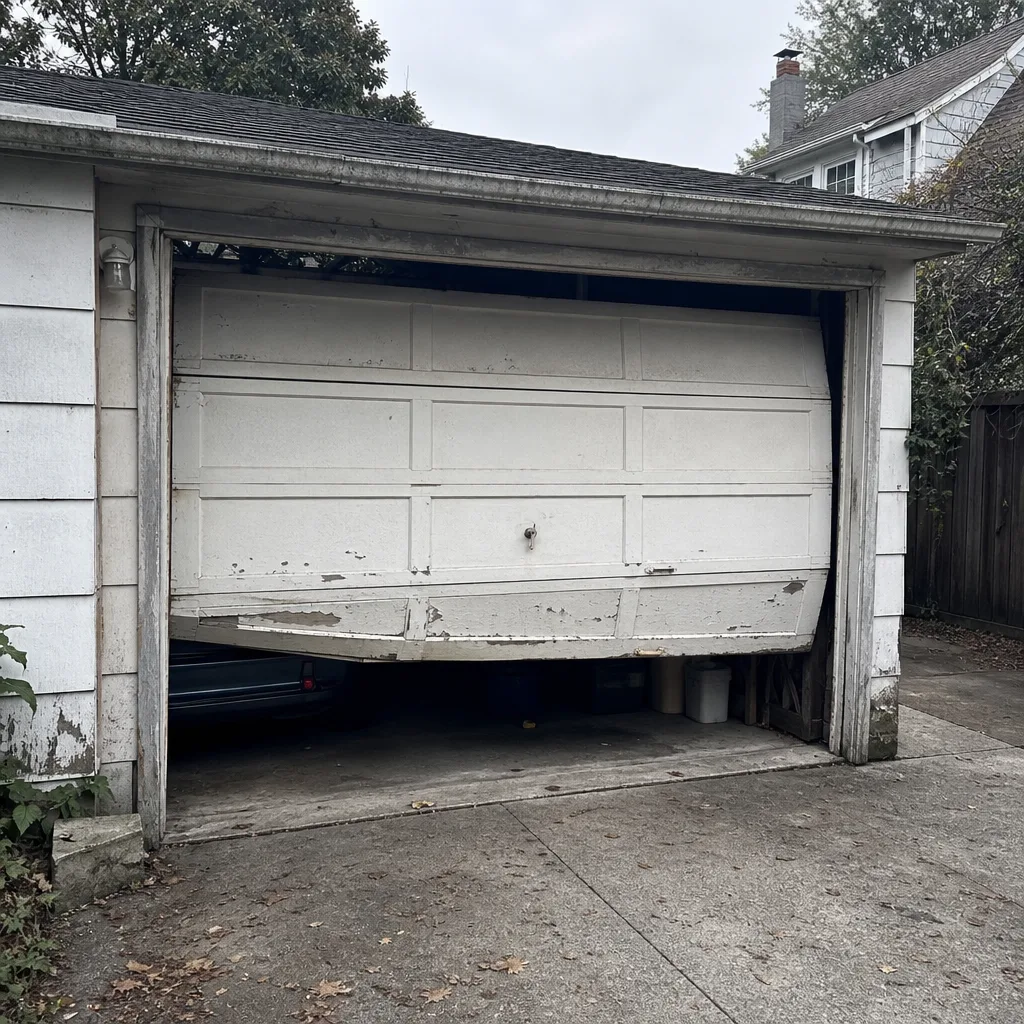 Before
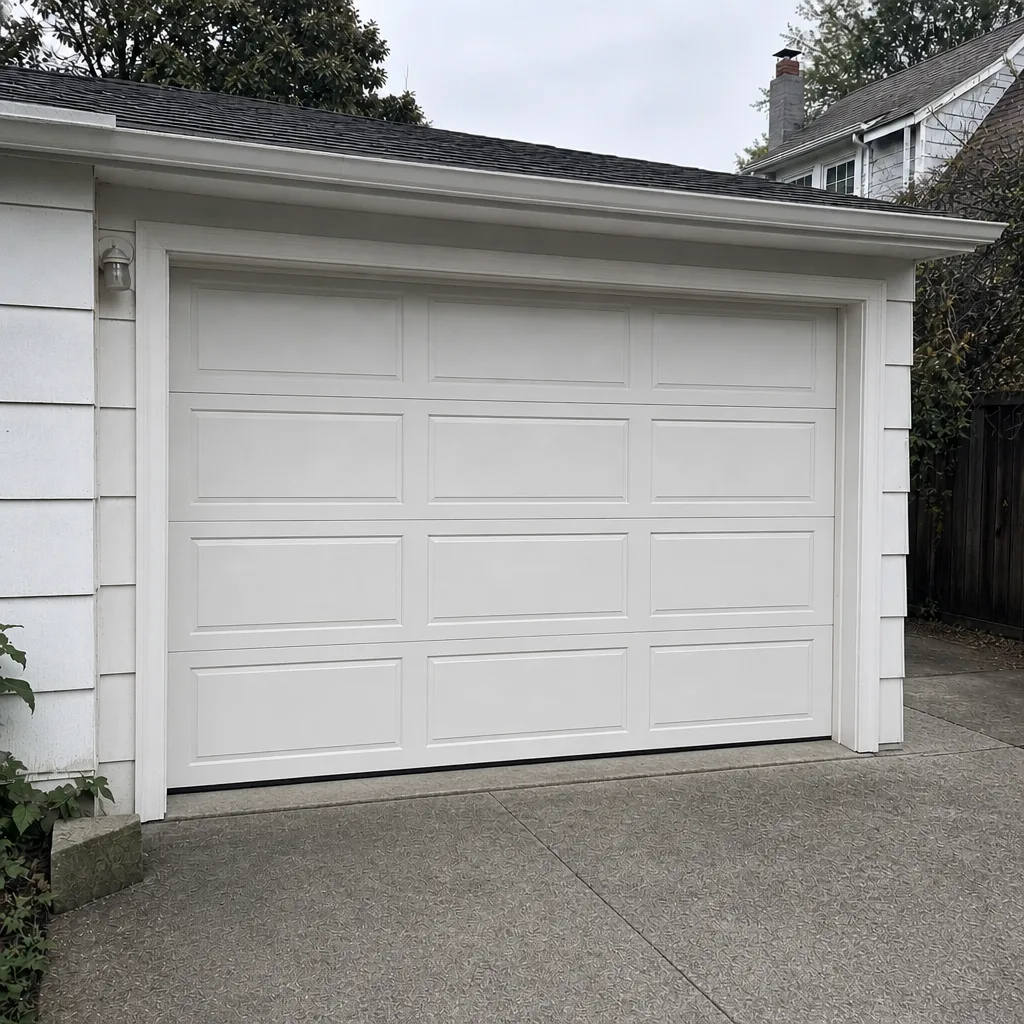 After
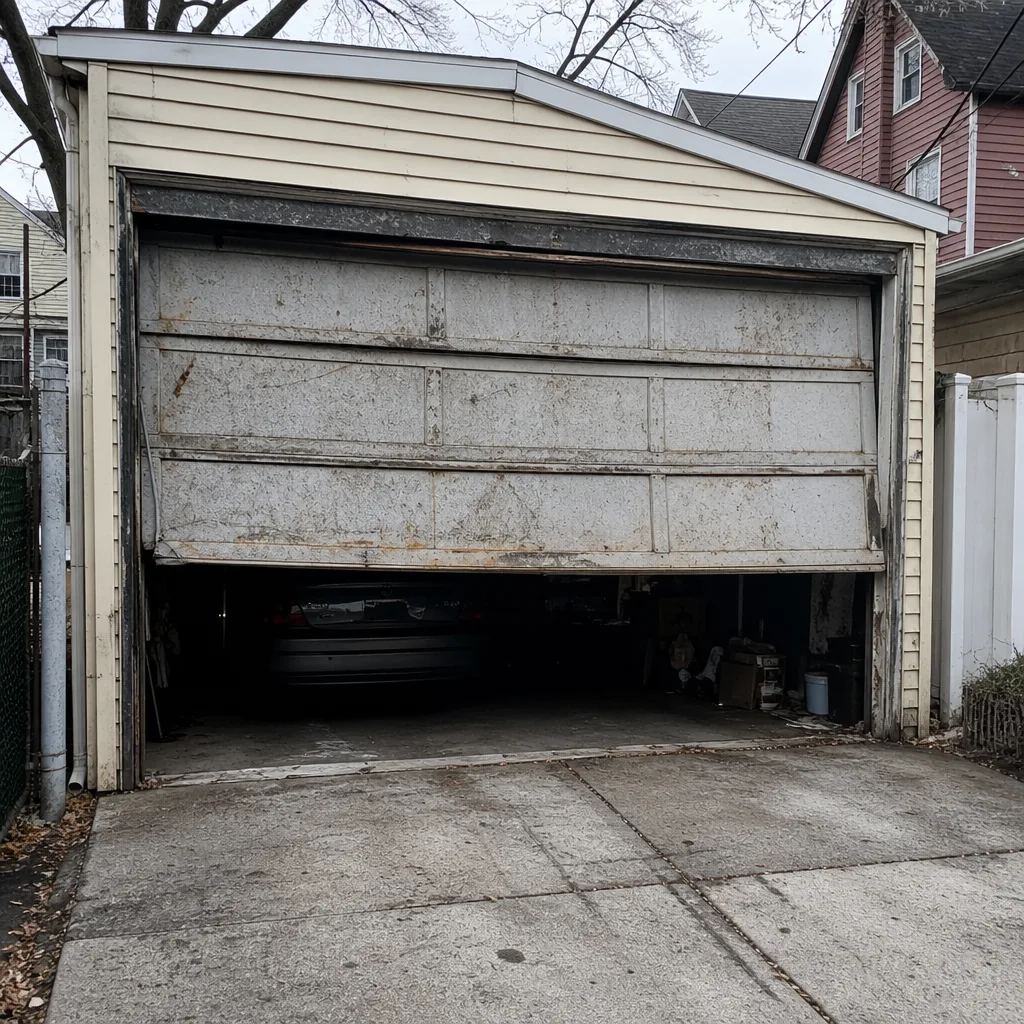 Before
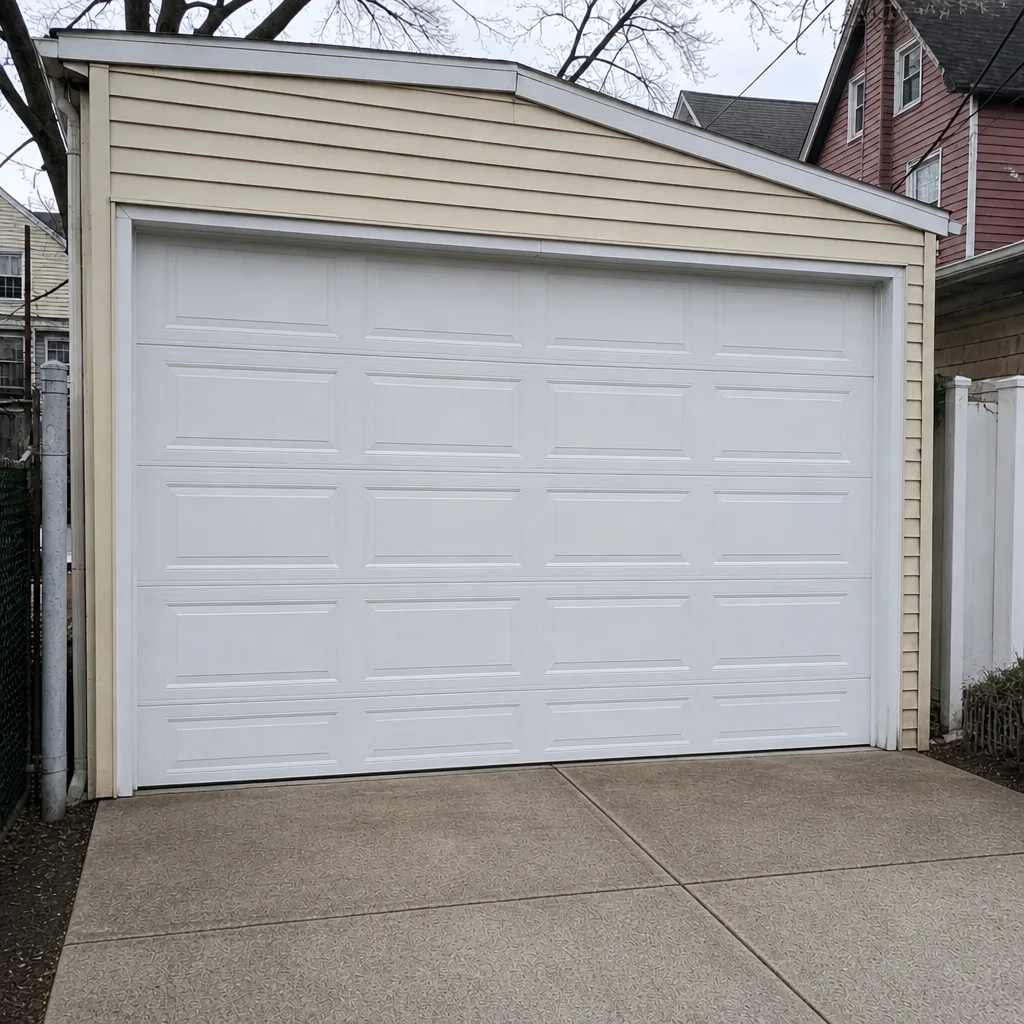 After
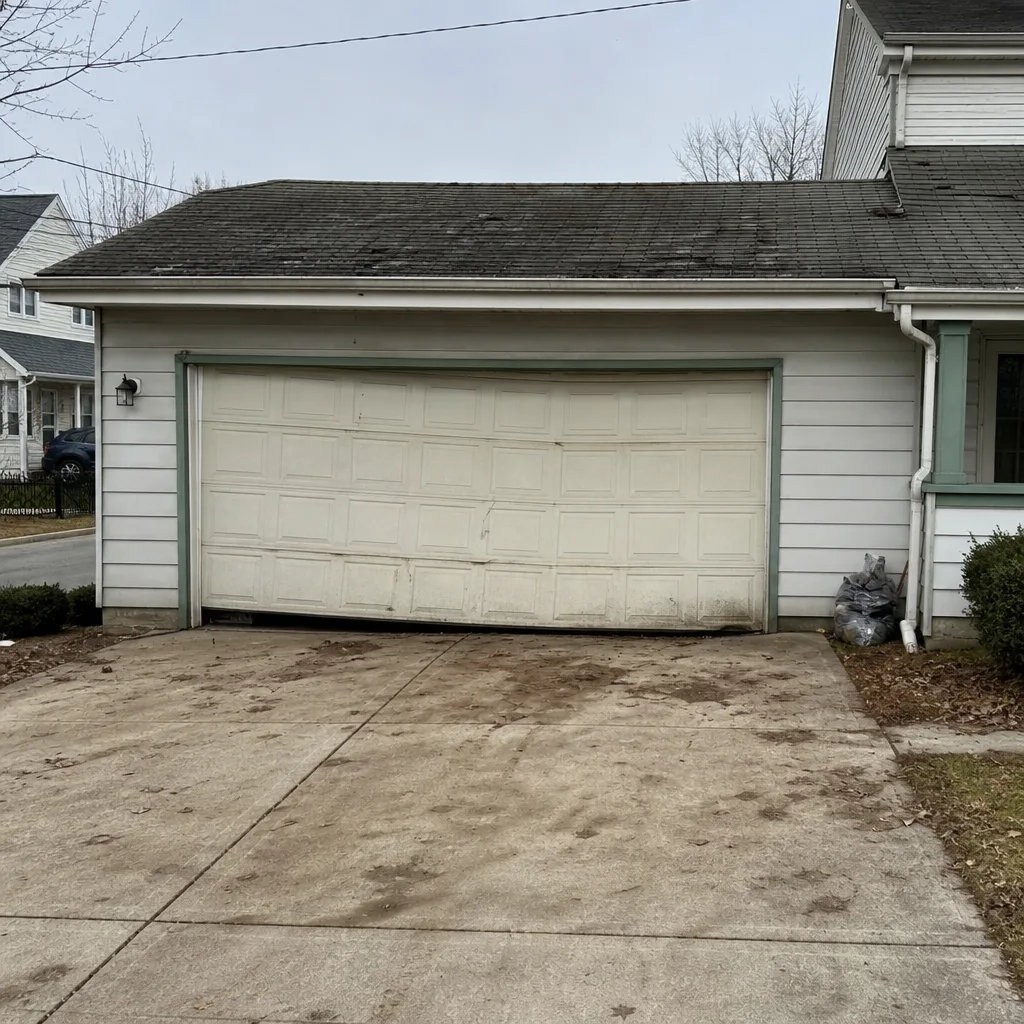 Before
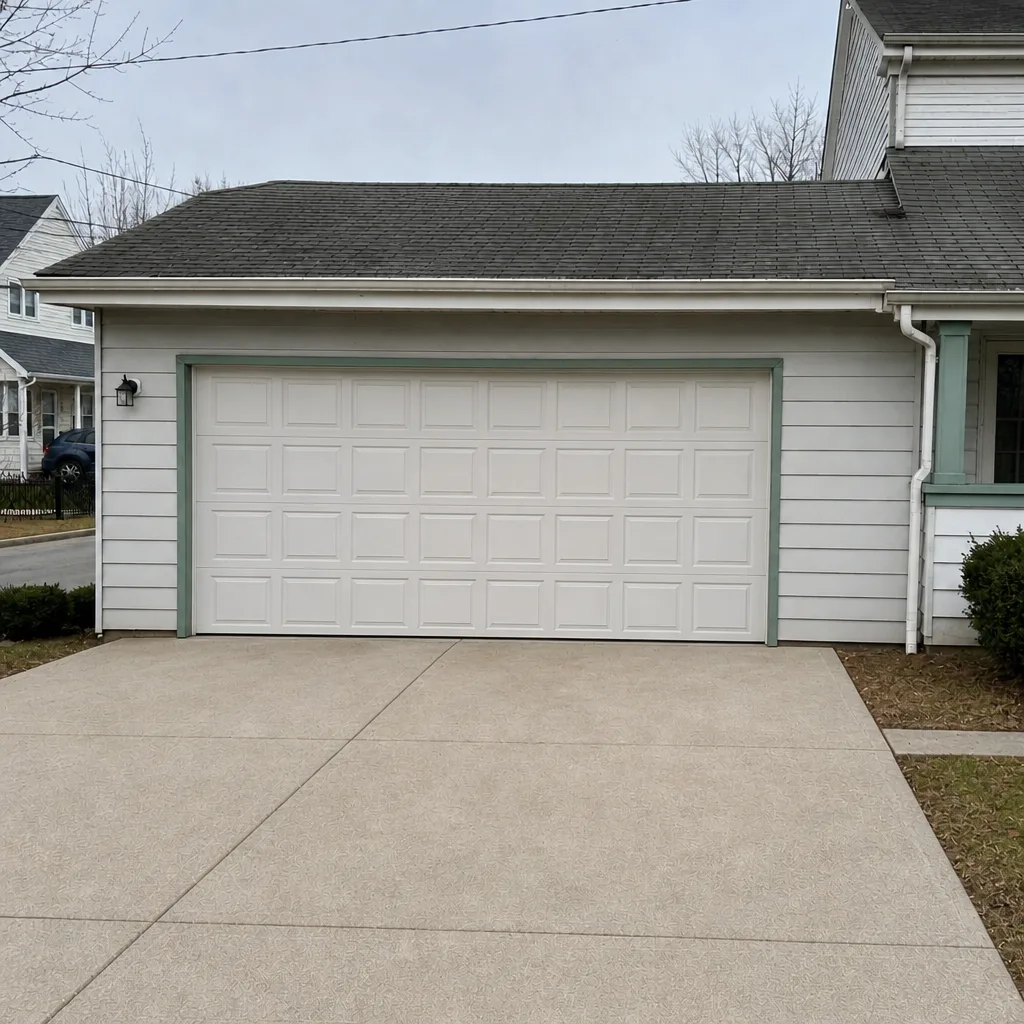 After
When to Call a Professional
Call when the door won’t open or close at all, when a spring snaps (you’ll hear it – a loud bang from the garage), when the door is visibly off its tracks, or when the opener runs but the door doesn’t move. Call when a cable is frayed or hanging. Call before you attempt any spring or cable repair yourself. Call when you’re comparing two estimates and need a straight read on which one reflects the real scope of the job. And call if your door is your only way to your car or to the street – that access matters, and it can’t wait indefinitely.
Garage Door Repair East Village offers free estimates in East Village. Call (866) 951-2601. We answer 24/7. Fast dispatch from 7am to 7pm, Sunday through Friday. Every price is set per job by a written estimate, agreed before any work starts.
Frequently Asked Questions
Garage door repair in East Village typically runs from about $150 for a minor adjustment up to $900 or more for a serious opener or panel replacement, with most jobs clustering between $200 and $600. The written estimate on your specific door sets the final number. Call (866) 951-2601 for a free, itemized quote – estimates are free.
Three things typically drive the difference: labor access overhead in a dense urban neighborhood, insurance and licensing costs required in New York, and technical complexity from older, non-standard, or low-headroom garages. A quote that doesn’t explain which of these applies to your job is one to ask about before you agree. Call (866) 951-2601 and we’ll walk through the itemization line by line – the estimate is free.
Yes, we handle same-day repair on many issues – springs, cables, opener faults, tracks, and most non-structural problems. We answer 24/7, and fast dispatch runs from 7am to 7pm, Sunday through Friday. Call (866) 951-2601 and we’ll tell you what we can commit to for your door.
No – the price is agreed in writing before any work starts. If the diagnosis reveals something the original estimate couldn’t account for, we stop, explain the difference, and re-quote before doing anything. You approve the new number before work continues. That’s the standard we hold on every East Village job. Call (866) 951-2601 for a free estimate.
Yes – the local professionals we connect you with are licensed and insured as New York State requires. Our technicians have up to 12 years of experience across the eight major garage door brands, including LiftMaster, Chamberlain, Genie, and Clopay systems. Call (866) 951-2601 to book a free estimate.
As a general rule, if the repair costs more than half the price of a new door and the door is past the middle of its useful life, replacement usually wins on total cost. Below that threshold, repair usually wins. We handle both repair and installation in the same service, so we can walk through the math with you rather than steer the call. Call (866) 951-2601 for a free estimate.
The Bottom Line
Garage door pricing in East Village is higher than national averages for explainable reasons: urban labor access, insurance and licensing overhead, and the technical complexity that comes with older, non-standard, or low-clearance garage design. The numbers in this guide give you a reference point for every line item, from a $180 single-spring replacement on up. The single most useful skill is reading a quote properly: itemized parts, itemized labor, disposal and access broken out, and a clear statement that the price is agreed before work starts. When a quote has all of that, you can compare any two estimates with confidence. When it doesn’t, push back. That’s what the estimate is for.
If you’re comparing quotes and want a straight read on one of them, or you’ve got a door stuck and need someone out, call (866) 951-2601 for a free estimate. We work on the brand already in your garage, we handle springs, openers, panels, and tracks under one roof, and we’ll tell you honestly whether your job calls for a repair or a replacement. We answer 24/7. Fast dispatch from 7am to 7pm, Sunday through Friday.
Written by the team at Garage Door Repair East Village.