
Last updated November 21, 2026
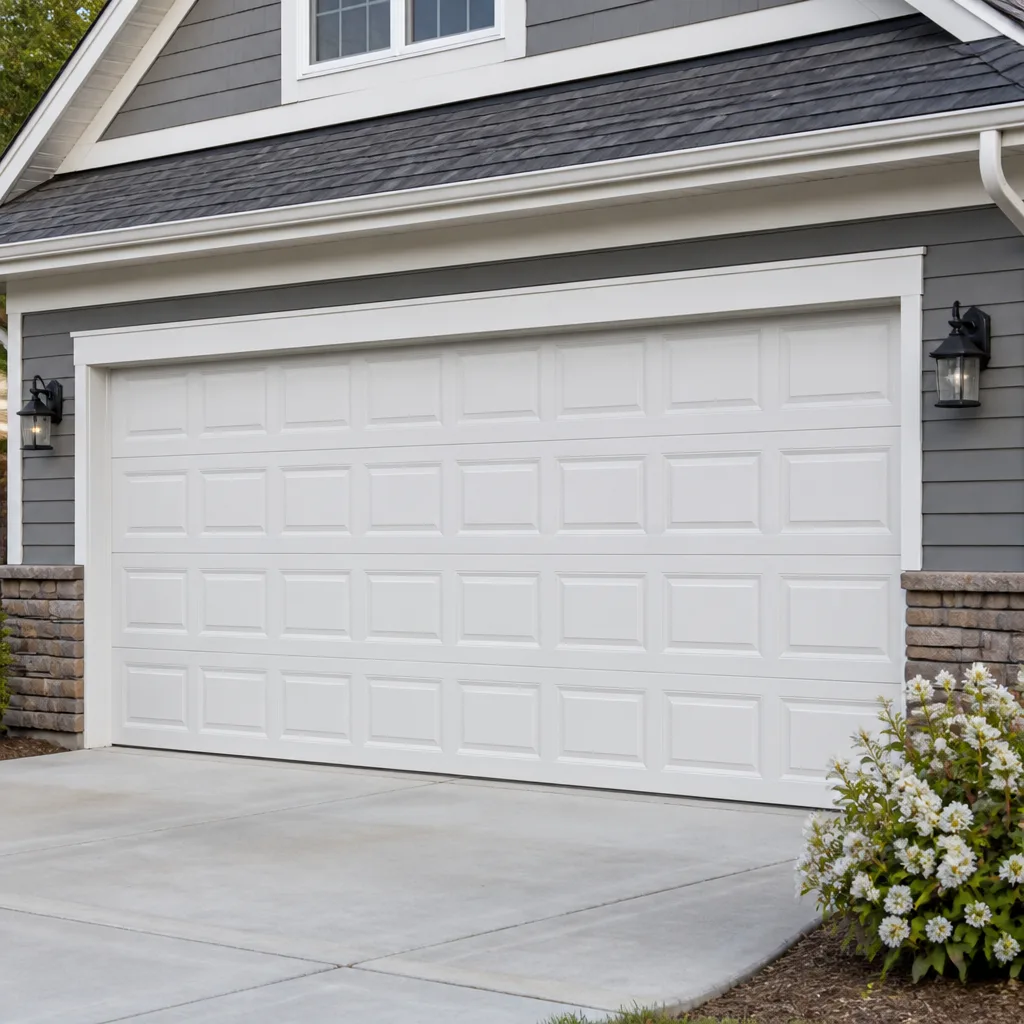 Raised-panel steel
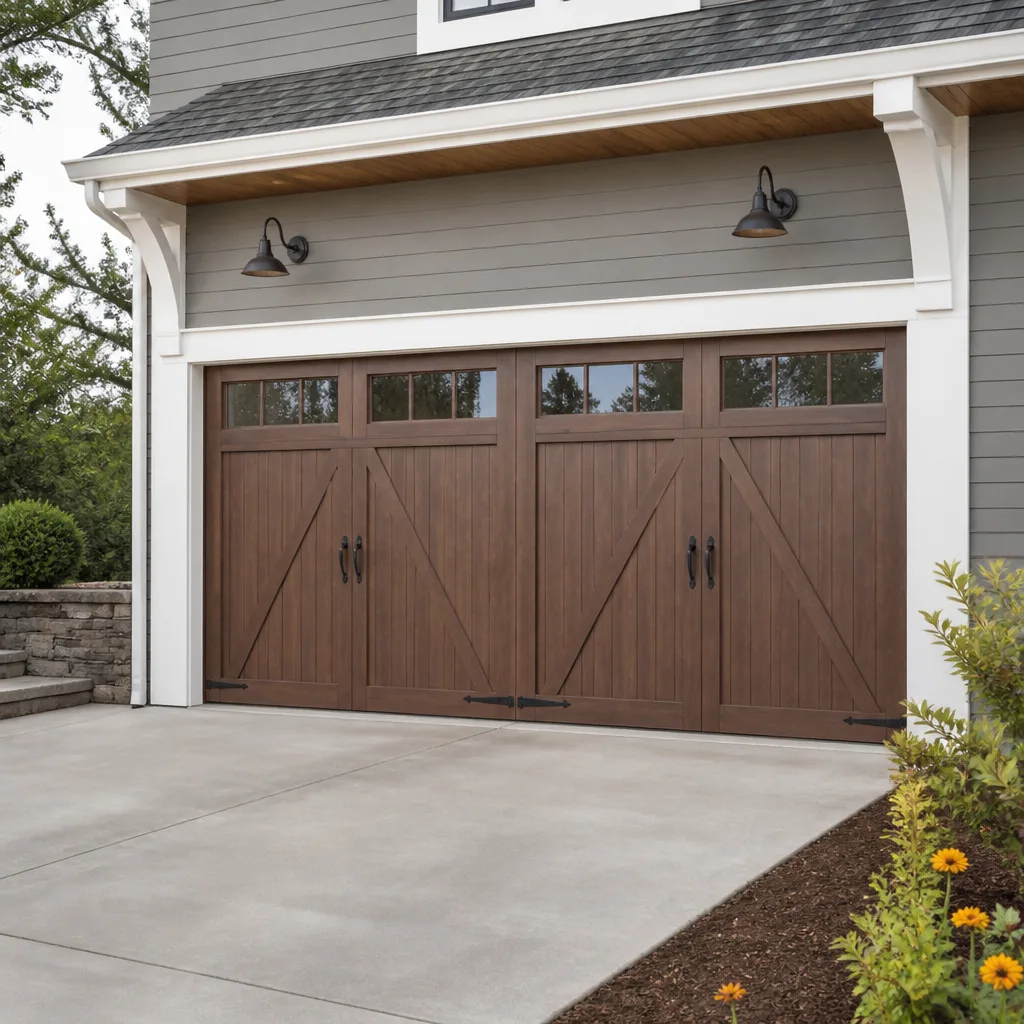 Carriage house
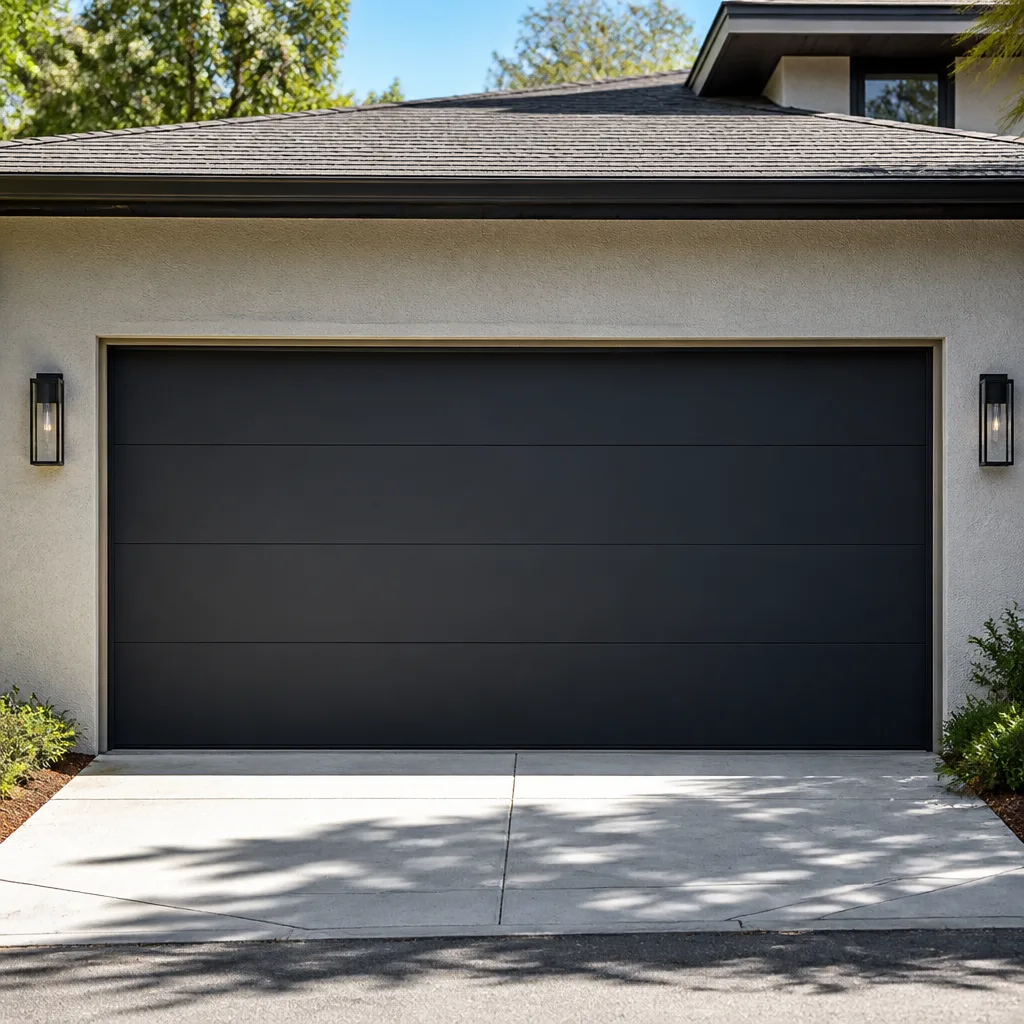 Modern flush
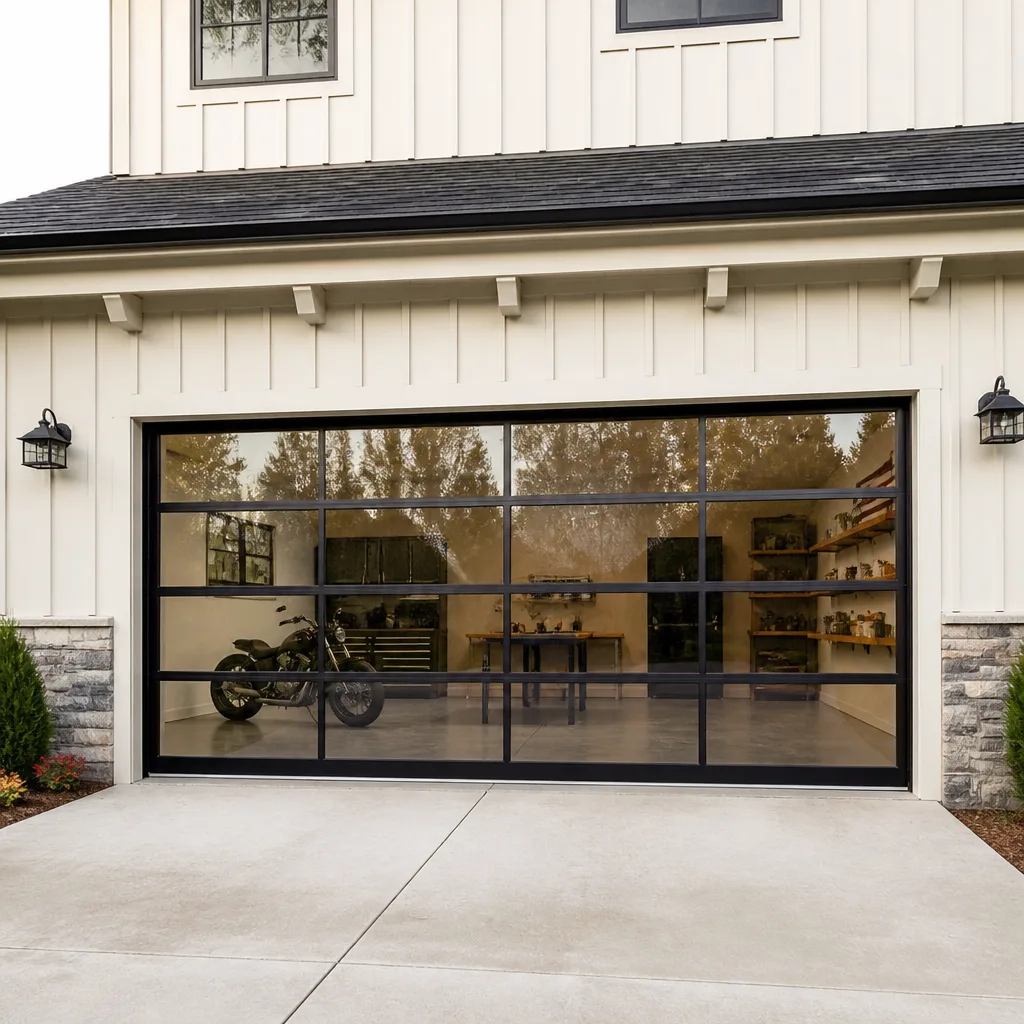 Full-view glass
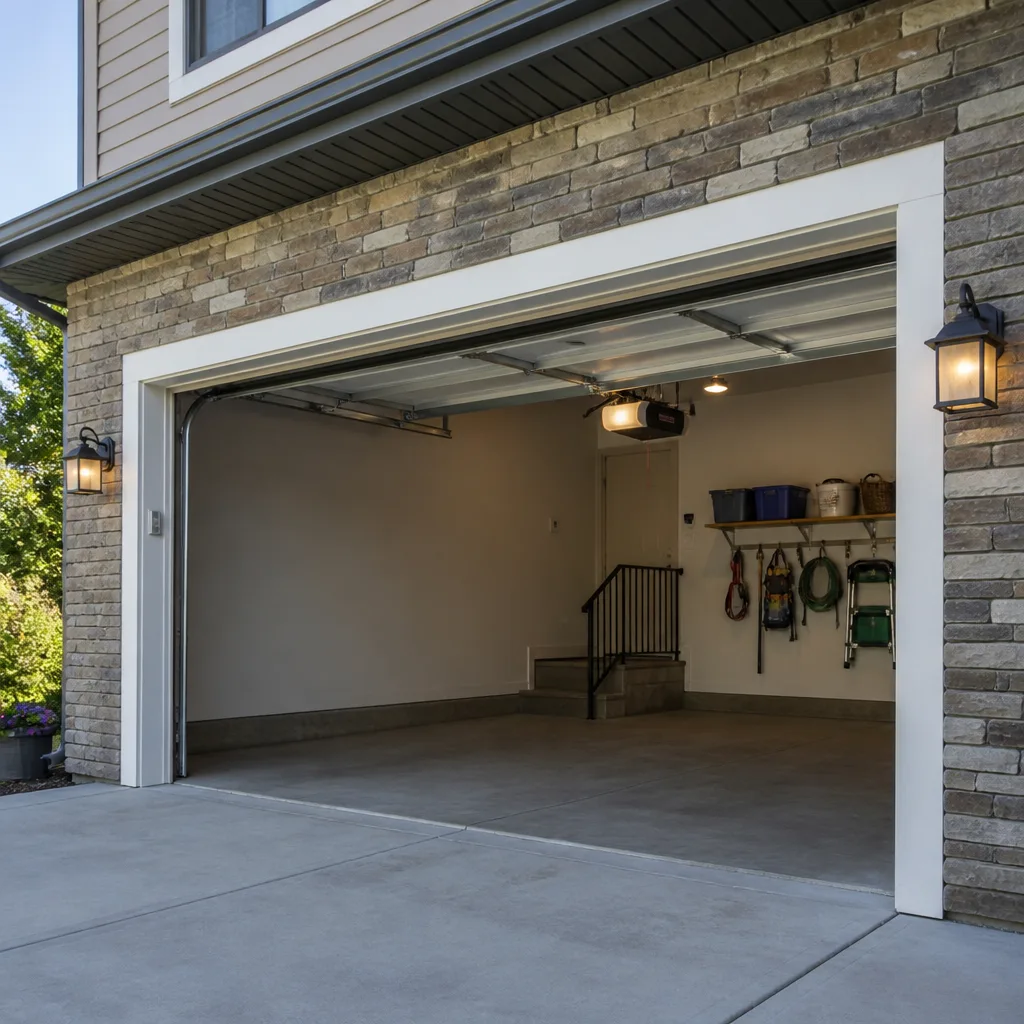 LiftMaster openers
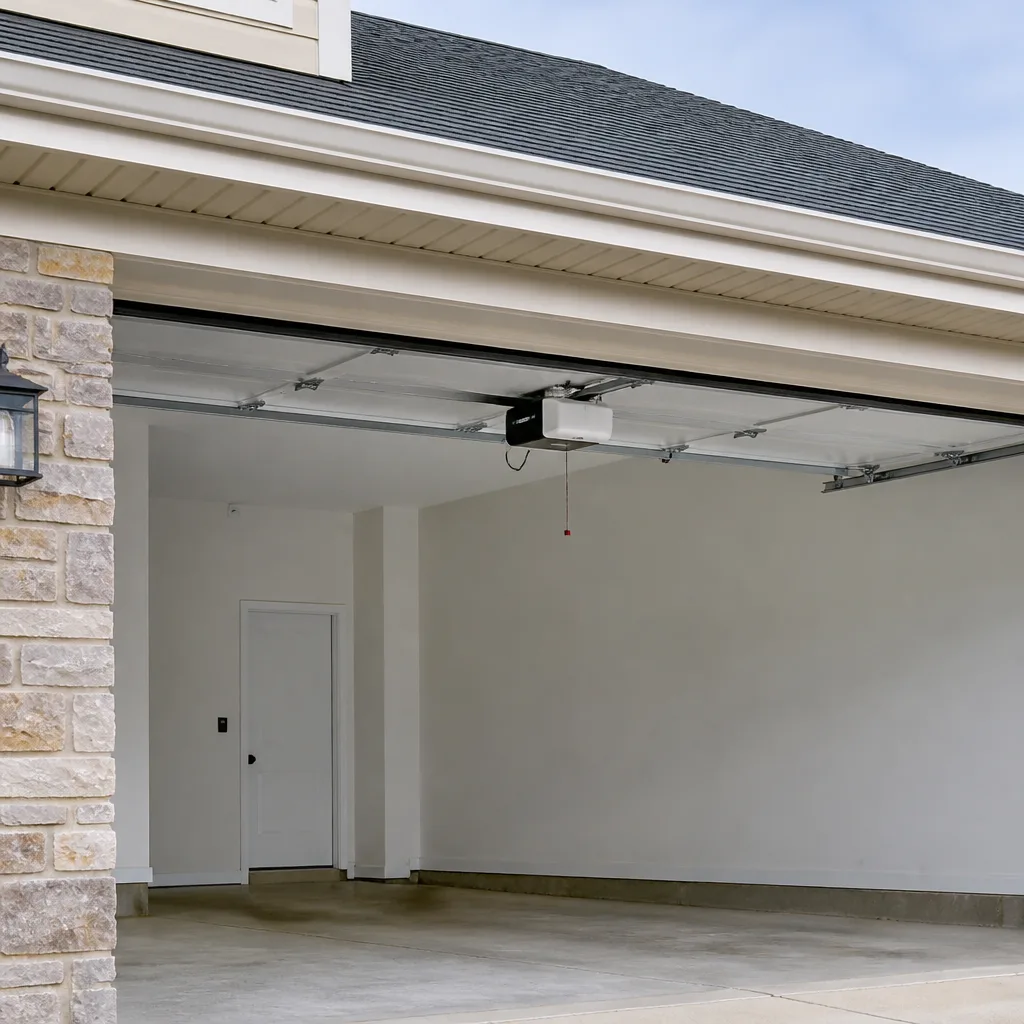 Chamberlain openers
Full 25-point door and opener safety check with every visit - springs, cables, rollers, tracks, and your LiftMaster or Chamberlain opener included
You get a price before we start. It does not change when the pro arrives.
Get your free estimateGarage Door Warning Signs: An East Village Homeowner’s Reference Guide
A grinding noise from your garage door opener is not a problem. It’s a symptom. The same sound can mean three different failed components depending on when in the cycle it appears: a worn drive gear at the start of travel, a dry or failing bearing mid-travel, or a binding trolley near the close limit. Homeowners in East Village hear the noise, call a general handyman, and end up paying for a part that was never the culprit. This reference maps symptoms to root causes. You’ll learn how to read your door’s behavior by timing, inspect the parts that actually predict failure, tell opener problems from door problems, and know which signs mean same-day service.
Quick Answer
A garage door warning sign is any change in sound, speed, movement, or appearance that departs from your door’s normal operating behavior. The signs that need same-day service are: a snapped spring (door won’t lift or slams down), a door hanging off one track, a cable that’s come loose or frayed, or any door that reverses unpredictably. Slower, cosmetic, or intermittent changes can usually be scheduled within a few days. In East Village’s narrow garages, the most overlooked early warning is a track that’s drifted millimeters out of alignment, which shows up as a slight hesitation or scrape before any obvious damage appears.
Styles & brands we work with
- Raised-panel steel
- Carriage house
- Modern flush
- Full-view glass
- LiftMaster openers
- Chamberlain openers
Table of Contents
- Why Timing Matters: A Symptom Map by Cycle Phase
- What Normal Wear Looks Like vs. Pre-Failure: A Visual Guide
- Opener Failure or Door Failure? How to Tell the Difference
- East Village’s Narrow Garages: Track Misalignment You Won’t See Elsewhere
- Which Warnings Need Same-Day Service vs. a Scheduled Repair
- Springs and Cables: The Signs You Must Never Ignore
- The Cost of Waiting: What Small Signs Turn Into
Why Timing Matters: A Symptom Map by Cycle Phase
Most garage door troubleshooting advice tells you to listen for “strange noises.” That’s useless. Every component in the system runs at a specific point in the open-close cycle, so when a symptom appears tells you more than what it sounds like. If you can describe timing accurately to a technician, they arrive with the right parts and finish in one visit instead of two.
Here’s how to map what you’re hearing and seeing:
At the Moment of Open
- Loud bang or pop at the start, door barely moves: a torsion spring has broken. The spring does the lifting; the opener only guides. When the spring snaps, the opener strains against the full door weight.
- Opener hums but nothing moves: the opener is running but its drive gear, chain, or belt has failed or disconnected from the trolley.
- Door rises a few inches then stops: the travel limit or force setting on the opener has drifted, or something is binding on the track right at the doorway.
Mid-Travel
- Grinding or squealing that appears partway up: worn rollers or dry hinges. In East Village, the same sound often traces to a roller that’s left the curved section of track and is dragging along a straight run.
- Door jerks or stutters: a track that’s out of alignment or a roller that’s flat-spotted. Narrow openings make this more common because there’s less tolerance for sideways play.
- Door drifts to one side: one cable is slack or one spring in a pair is weaker than the other.
At Close
- Door slams down: a broken spring or a failed safety reverse. Both need immediate attention.
- Door reverses before touching the floor: the safety sensors are misaligned or blocked, or the close-force setting is too low.
- Door stops short of the floor: the down limit needs adjusting, or debris on the track is stopping the travel.
At Rest
- Door sits unevenly: one cable has stretched or one spring has lost tension. This is often the first visible sign, weeks before the door fails to open.
- Visible gap at the floor or sides: panel or track damage, or the door has been pushed off its hinges.
- Creaking or settling sounds when the door is still: usually the door reacting to temperature changes, not a failure, but worth noting if it’s new.
Write down the timing before you call. “It grinds mid-travel but only going up” is a description a technician can act on. “It’s making a noise” means a longer diagnostic visit.
What Normal Wear Looks Like vs. Pre-Failure: A Visual Guide
Sound gets the attention. Visual inspection catches failures earlier, and in urban garages it’s often the only reliable signal. East Village garages frequently sit under buildings, in tight courtyards, or at the back of narrow lots. That means less airflow, more humidity cycles from weather entering the garage, and less chance to spot a problem from a distance. You need to know what to look for up close.
Here’s what normal wear looks like for each major component, and where it crosses into pre-failure:
Springs
- Normal: uniform color, straight coils, no visible gaps between windings, neither spring noticeably stretched longer than its pair.
- Pre-failure: a visible gap in the coil (a broken spring will show a clear split, often with a section hanging loose), rust that’s pitted rather than surface-level, or one spring visibly longer than its partner. A pair showing a stretch difference of more than an inch or so is a warning.
Cables
- Normal: taut, evenly wound on the drum, no fraying or kinks.
- Pre-failure: stray strands lifting off the cable, a cable that’s come off its drum, or one side noticeably slack compared to the other. A cable is under high tension; never touch one that looks compromised.
Rollers
- Normal: rounded, roll freely, slight play in the hinge bracket.
- Pre-failure: flat spots, cracks, or a roller that’s worn from round to oval. Steel rollers that have worn through their bearing are common; nylon rollers that have chipped or cracked are too. Both show up as a stutter mid-travel.
Tracks
- Normal: parallel sides, smooth bends at the curve, straight line from bracket to bracket.
- Pre-failure: a dent or kink, a gap between the vertical and horizontal sections, or a curve that’s wider than it should be. Stand at the doorway and sight down the track. Any wobble in what should be a straight line is a warning.
Panels and Hinges
- Normal: flush alignment, hinges tight, no visible cracks at the hinge points.
- Pre-failure: a hinge that’s pulled away from the panel, cracking around the screw holes, or a panel that’s bowed. On Clopay and Amarr steel doors in particular, hinge-point cracks are a common early sign of a door that’s been pushed or hit.
Do this inspection twice a year. It takes ten minutes and catches most of what would otherwise become a same-day call.
Opener Failure or Door Failure? How to Tell the Difference
This is the single most common misdiagnosis we’re called to correct in East Village. A homeowner hears a strain, assumes the opener is dying, and replaces a perfectly good LiftMaster or Genie unit. The actual failure was a worn roller or a stretched spring, and the new opener will fail the same way within months because the door still isn’t balanced.
The test is simpler than it sounds:
- Pull the emergency release. This disconnects the opener from the door so you can move the door by hand.
- Lift the door manually halfway and let go. A balanced door stays roughly where you put it, or drifts slowly. A door that crashes down, needs real effort to lift, or won’t stay up has a mechanical problem: spring, cable, roller, or track. The opener is not at fault.
- If the door moves freely by hand but the opener won’t move it, the problem is in the opener: drive gear, logic board, capacitor, or the safety sensors cutting the cycle short.
- If the door moves by hand but the opener only moves it in one direction, check the travel limits and force settings before suspecting the opener itself. This is often a setting issue, not a failed part.
The reason this distinction matters so much is cost. Replacing an opener when the door is unbalanced is a two-part expense that doesn’t fix the underlying drag. Repairs and honest diagnoses live on the same side of the trade for us, which is why we can tell you plainly whether the fix is the door or the box on the ceiling. If you do need garage door opener repair, the technician will test the door balance first anyway; that’s the correct starting point regardless of what brand is on the rail.
East Village’s Narrow Garages: Track Misalignment You Won’t See Elsewhere
Garage doors in East Village fail in specific ways that a suburban installation rarely encounters. The reason is spatial. Many East Village garages are single-car bays tucked into narrow lots, alley-facing openings, or under-building spaces where the tracks run close to the walls. Clearance is measured in inches, not feet.
That closeness has consequences:
- Tracks get knocked out of alignment more often. A car door opened inside a tight garage, a bag of groceries set against the wall, a bicycle leaned against the track: in a wider suburban garage these are harmless. In a narrow East Village bay, they nudge the vertical track inward by a few millimeters, and that’s enough to make a roller bind.
- The roller drags before you hear it. A misaligned track in a tight space often produces a scratch or hesitation rather than a loud grind, because the roller is only lightly pinched. Homeowners hear nothing unusual until the roller wears through.
- Doors that close against a wall have different sensor problems. When the photoelectric sensors sit near a wall or doorframe, sunlight and shadows swing across them differently through the day. A door that reverses only in the morning or late afternoon is often a sensor alignment issue, not a failing opener.
- Humidity pockets in covered or shaded garages (common in East Village where garages sit beneath buildings or behind other structures) accelerate rust on springs and hinge pins. Rusted hinge pins seize and cause the door to drag, which then strains the opener.
- Low headroom installations. Many East Village garages have tighter ceiling clearances than a suburban garage. Low-headroom doors run on different spring and track configurations, and a technician who doesn’t recognize the setup can misdiagnose a normal low-headroom behavior as a failure.
If your door hesitates, scratches, or reverses only in certain conditions, describe the location and orientation of your garage when you call. A technician who knows the door is in a narrow alley bay approaches the diagnosis differently than one expecting a wide suburban opening.
Which Warnings Need Same-Day Service vs. a Scheduled Repair
Not every warning sign is an emergency. Treating a slow roller as urgent wastes money. Treating a broken spring as routine can strand your car for days or leave a security gap. Here’s the split.
Same-Day Service
- A snapped torsion or extension spring, or a door that won’t lift off the floor.
- A door that’s come off its track or is hanging crooked.
- A loose, slack, or visibly frayed cable.
- A door that reverses unpredictably or fails to reverse when it should.
- A door that’s been forced or hit and no longer sits correctly in its frame.
- Any situation where the door cannot be secured (open and unable to close).
Scheduled Repair (Within a Few Days)
- Grinding, squealing, or popping that appears mid-travel but the door still cycles normally.
- A door that’s slower or louder than it used to be.
- Worn rollers or hinges that aren’t binding yet.
- Sensors that reverse intermittently.
- Cosmetic panel damage or a hinge screw that’s pulled loose.
- Remote or keypad that’s stopped working but the wall button still functions.
The cost difference of waiting is real. A worn roller is a small repair. A door that keeps cycling on a worn roller chews through the track, and track replacement costs considerably more. The rule is: if the symptom is mechanical and getting worse, schedule it. If the door can’t be used or secured, call today.
Springs and Cables: The Signs You Must Never Ignore
Springs and cables are the only parts of a garage door system that can seriously injure someone. A torsion spring is under enough tension to move a 200-pound door; a cable under load can whip when it fails. Both parts are also the ones homeowners most often try to inspect too closely.
The safety line is simple: look, don’t touch. What you’re watching for:
- A visible gap in the spring coil, a section hanging loose, or a loud bang followed by a door that won’t lift: a broken spring. Stop using the door. The opener will try to lift the full weight and can fail or drop the door.
- A spring that looks stretched longer than its partner: one spring taking more of the load, which means the other is weakening and the door is unbalanced.
- Deep rust or pitting on the spring: a spring that’s about to fail. Rust doesn’t just look bad; it changes the metal’s behavior under load.
- A cable that’s come off the drum, been slack, or shows stray strands: don’t operate the door, and don’t try to reset the cable yourself. The tension isn’t something to handle without the right tools and training.
This is why spring repair is its own specialization in the trade, not a task to pass to a generalist. It requires the right winding bars, the correct spring for the door weight, and the knowledge to balance a pair. Our technicians have up to 12 years of experience specifically with garage door systems, and we treat spring work with the caution it deserves. For a closer look at what that repair involves, see garage door repair.
The Cost of Waiting: What Small Signs Turn Into
Every warning sign in this guide has a “small” version and a “large” version. The gap between them is what waiting costs. This isn’t a scare tactic; it’s how the mechanics work.
- A worn roller ($) becomes a chewed track ($$) if left alone. A roller that stutters keeps grinding against the same point in the track. Eventually the track dents or bows, and now you’re replacing track sections, not just rollers.
- One weak spring ($) becomes a snapped pair ($$) or a burned-out opener ($$$). A door running on one weak spring is unbalanced, and the opener carries weight it was never designed to lift. The opener’s drive gear wears, the motor overheats, and what started as a spring problem turns into an opener replacement.
- A sensor that reverses intermittently ($) becomes a door that won’t stay down ($$). The sensors are cheap to align or replace. The door that reverses at odd times is a security problem and often leads to force-setting changes that mask the real issue.
- A slightly out-of-alignment track ($) becomes a door that’s come off its track ($$). In East Village’s narrow bays, a small misalignment is easy to nudge further. The door catches, bends a hinge, and the fix escalates.
We give free estimates, so the cost of a diagnostic is nothing. The cost of waiting is measurable in parts and labor. If you’re not sure which category your symptom falls into, call and describe it. We’ll tell you honestly whether it’s a schedule-it or a come-today.
Common Mistakes to Avoid
- Replacing the opener before testing door balance. A homeowner in a narrow East Village bay hears a strain, assumes the opener is dying, and buys a new LiftMaster. The door is still unbalanced, and the new opener fails within months. Always test with the emergency release first.
- Ignoring a track that looks “almost straight.” In tight East Village garages, “almost straight” is a roller-eating condition. Sight down the track from the doorway and compare both sides.
- Oiling the tracks instead of the rollers and hinges. Track lubrication attracts grit and makes things worse. The moving parts (rollers, hinges, springs sparingly) are what need attention, and only with the right product.
- Adjusting the force settings to “fix” a door that’s binding. Turning up the force setting masks the symptom and puts more strain on the opener. Find the binding point instead.
- Treating a reversing door as a sensor issue every time. A door that reverses before touching the floor is sometimes a sensor problem, sometimes a travel-limit problem, sometimes a mechanical bind. Diagnose the cause, don’t just re-align the sensors and hope.
- Letting a rusted spring “wait until it breaks.” Rusted springs fail without warning. In covered or shaded garages common in East Village, springs rust faster than in open, dry spaces. Inspect them twice a year.
- Assuming a new door is a better value than a repair. Sometimes it is. Sometimes a spring swap extends a door’s life by years. We’ll tell you which one makes financial sense for your specific door, not push the bigger ticket.
See the difference
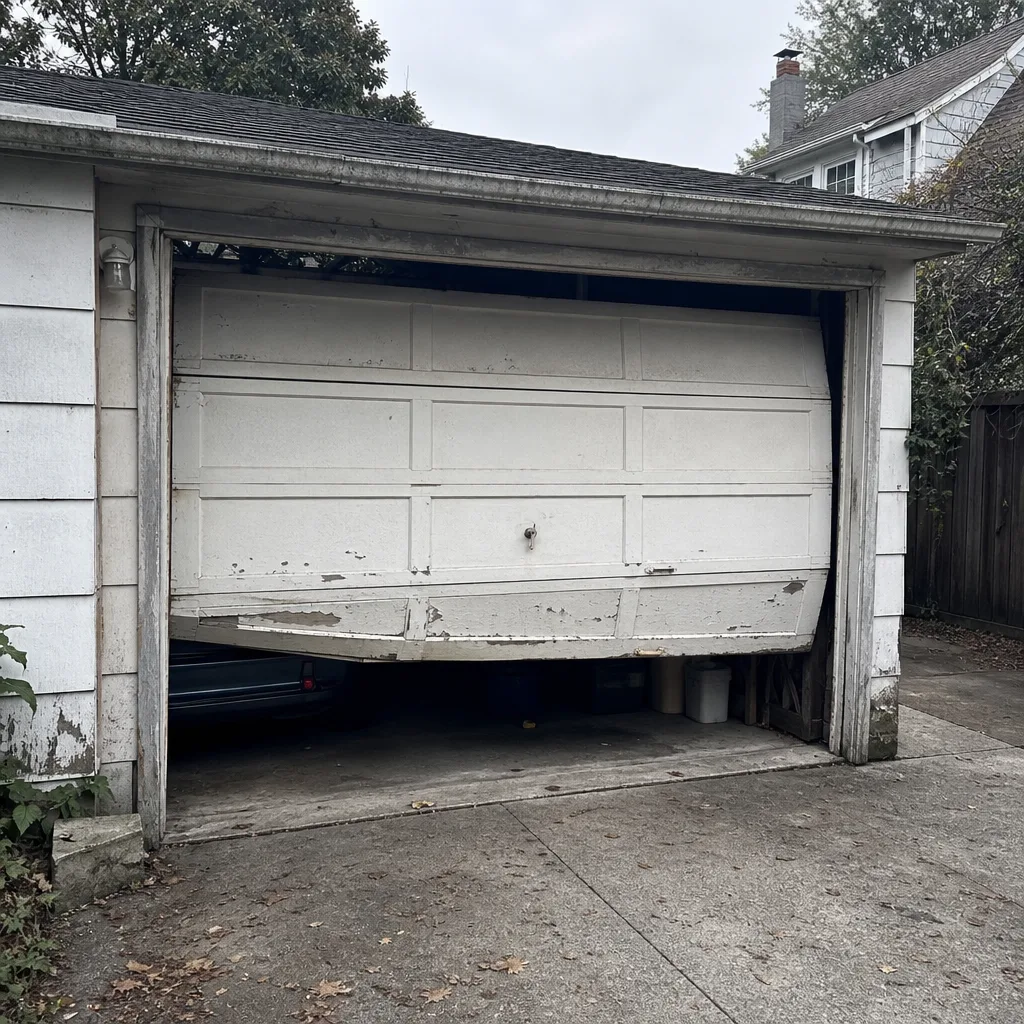 Before
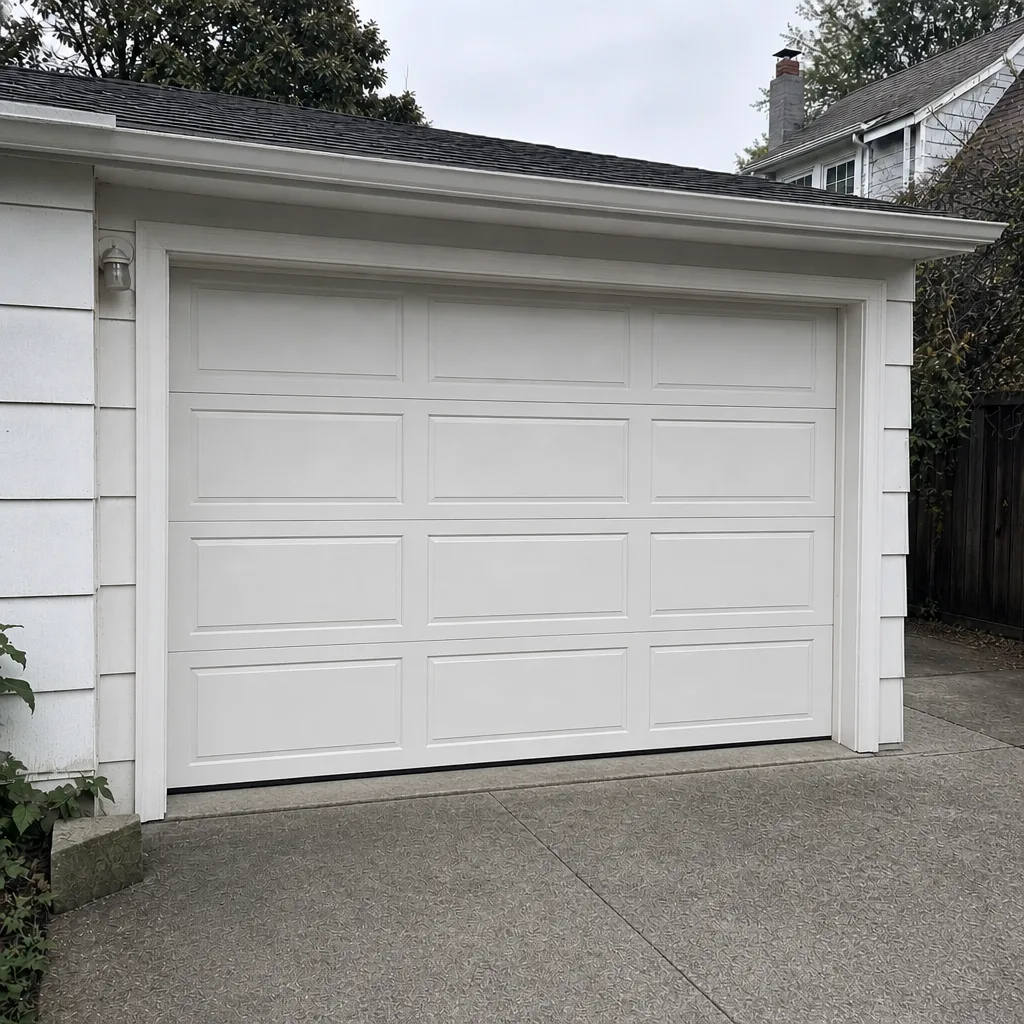 After
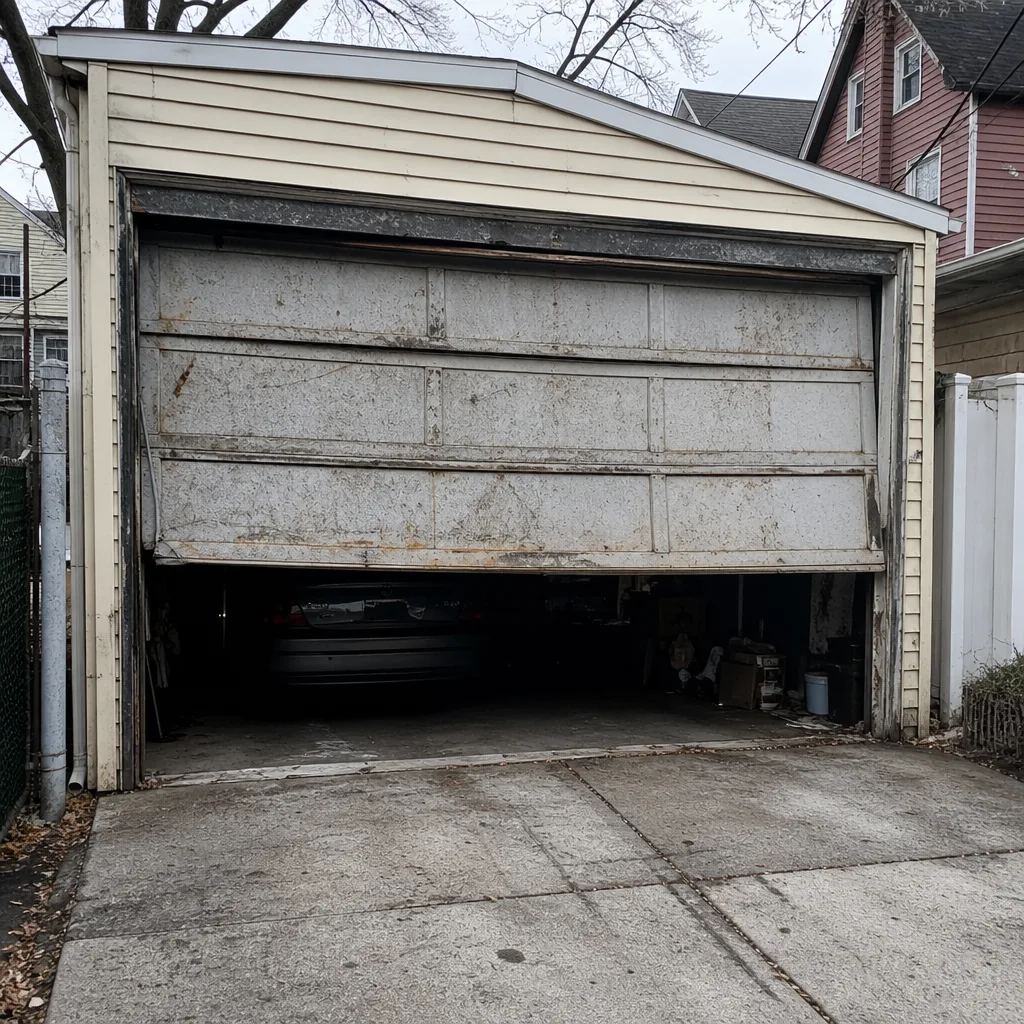 Before
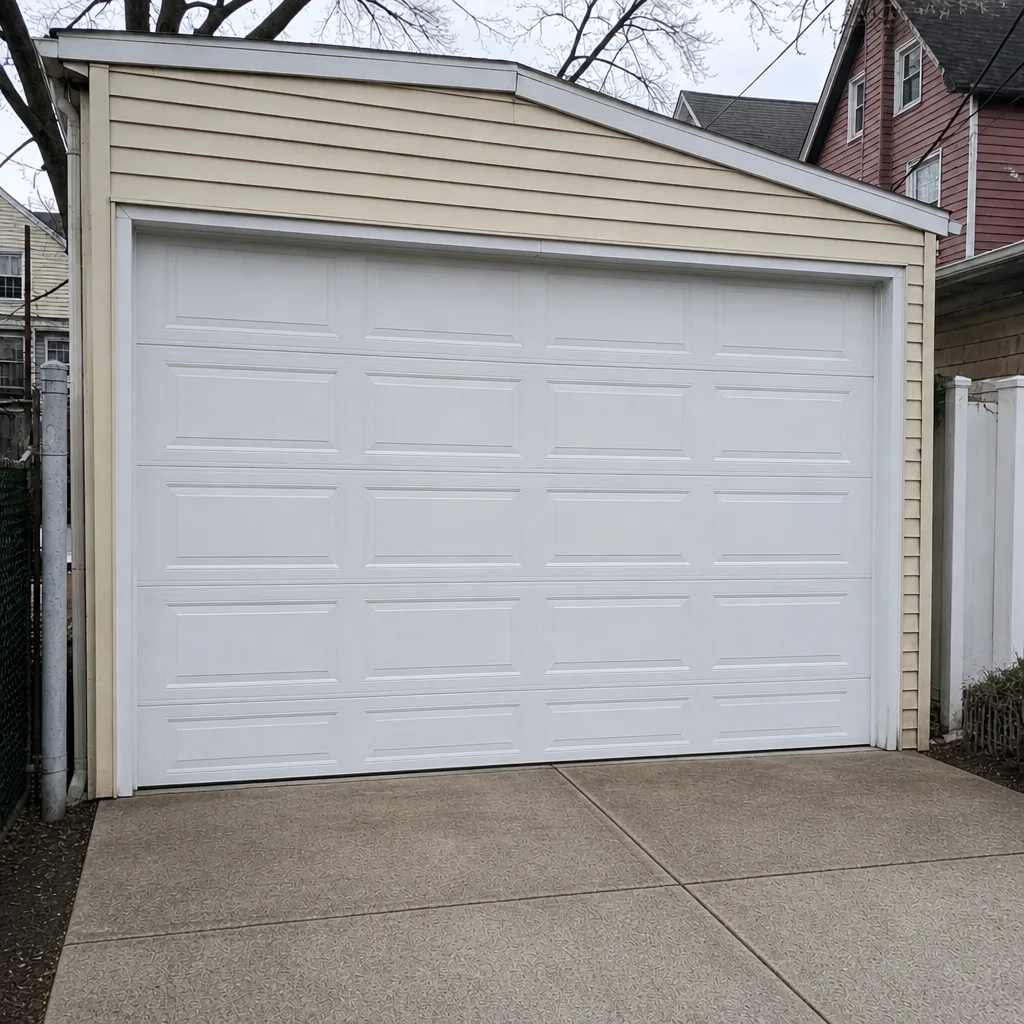 After
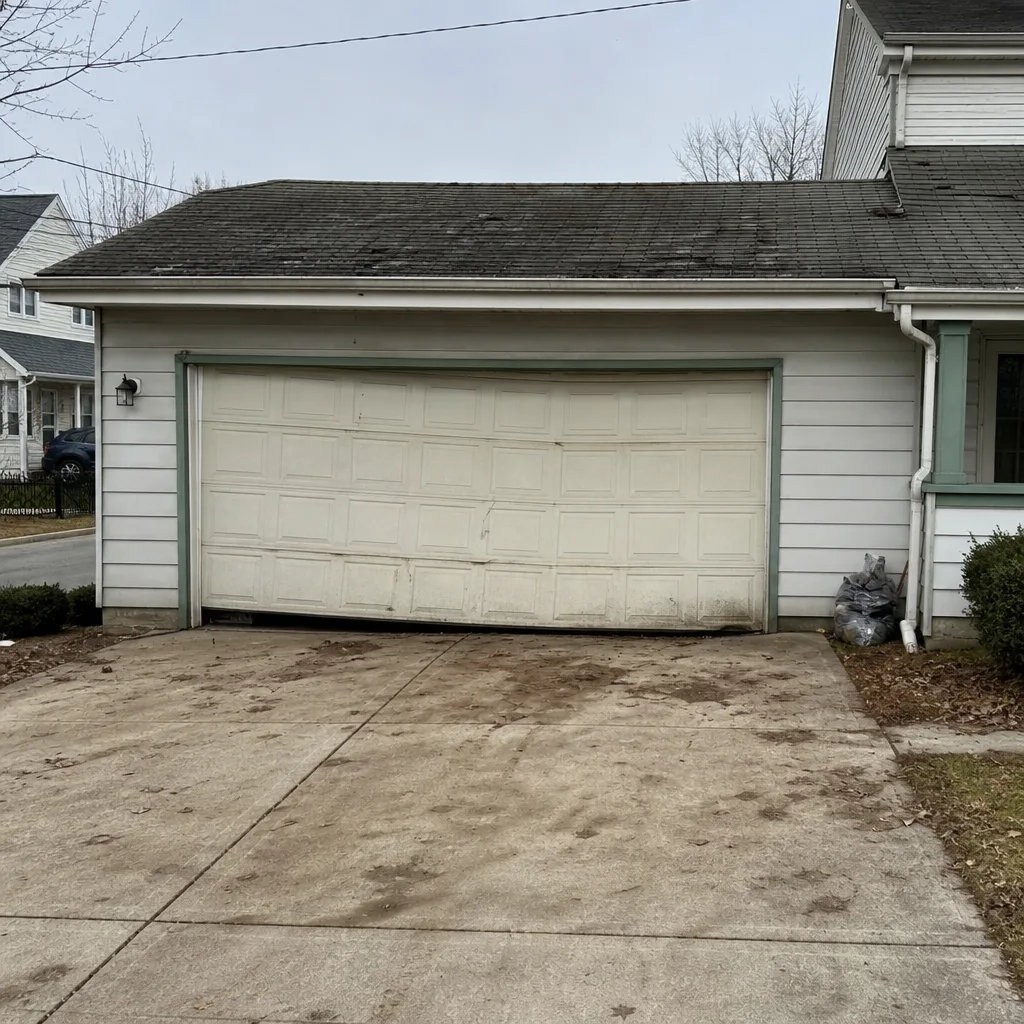 Before
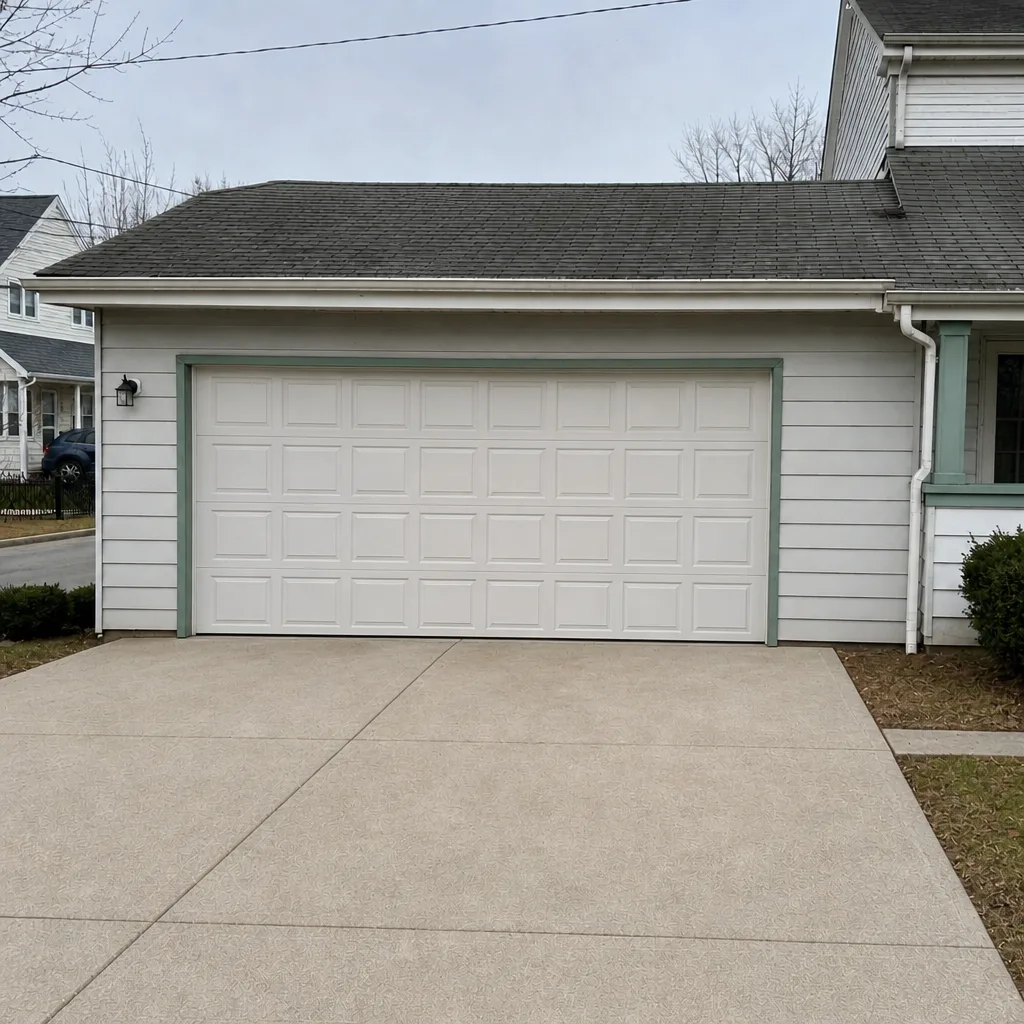 After
When to Call a Professional
Call when a spring is broken or rusted through, a cable is slack or frayed, a door has come off its track, a door reverses unpredictably, or anything mechanical is getting worse rather than staying stable. Those aren’t DIY territory; they’re where a specialist prevents a small cost from becoming a large one. If your door is behaving normally but you haven’t had it inspected in a while, a scheduled check is worth it, especially in East Village’s tight, shaded garages where rust and track drift happen quietly. Garage Door Repair East Village offers free estimates in East Village and works on the brand already in your garage: LiftMaster, Chamberlain, Genie, Clopay, Amarr, Wayne Dalton, Craftsman, and Raynor. Call (866) 951-2601. We answer 24/7, and fast dispatch runs from 7am to 7pm, Sunday through Friday.
Frequently Asked Questions
The most common warning signs are unusual noise (grinding, squealing, popping), a door that moves slower or reverses unpredictably, a visible gap in a spring coil, a door that sits unevenly, and rollers or hinges that look worn. Any one of these is worth a look; more than one together usually points to a single root cause.
Pull the emergency release and lift the door by hand. If it lifts and stays up easily, the door is balanced and the opener is the likely problem. If it’s heavy, erratic, or crashes down, the door’s mechanical parts (springs, cables, rollers, tracks) are at fault. Call (866) 951-2601 if you’re not sure; a technician will test it as the first step of any diagnosis.
A broken or visibly rusted-through spring, a slack or frayed cable, a door that’s come off its track, a door that reverses unpredictably, or any door that can’t be secured or can’t lift off the floor all need same-day service. Slower, noisier, or intermittent changes can usually be scheduled within a few days. Call (866) 951-2601 and describe the symptom; we’ll tell you which category it falls into.
Narrow bays and tight clearances mean tracks get nudged out of alignment by everyday contact (a car door, a bicycle, a bag of groceries) that wouldn’t matter in a wider garage. Covered and shaded garages also hold humidity longer, which rusts springs and hinge pins faster. The result is that East Village doors often show track drift and rust before they show obvious noises.
Twice a year is a reasonable baseline, and any time you notice a new sound, a slower cycle, or a gap at the floor or sides. The inspection should cover springs, cables, rollers, tracks, hinges, and panels. A free estimate from Garage Door Repair East Village includes a professional look at all of these.
The local professionals we connect you with are licensed and insured as their state requires. Our technicians have up to 12 years of experience with garage door systems. Call (866) 951-2601 for an exact quote; estimates are free.
The Bottom Line
Warning signs matter less as sounds and more as timings. Where in the cycle a symptom appears tells you what failed, and that description is what lets a technician arrive with the right part and finish in one trip. Springs, cables, and tracks are the signs to take seriously and never touch; worn rollers and hinges are the signs to schedule before they escalate. In East Village’s narrow, shaded garages, track drift and hidden rust are the warnings you’ll miss if you only listen. Inspect twice a year, test door balance before blaming the opener, and call when a spring is broken or a cable is suspect. We’ve seen what waiting does to a fixable problem. We’d rather help you stop it early.
Call (866) 951-2601 for a free estimate. We answer 24/7. Fast dispatch from 7am to 7pm, Sunday through Friday.
Written by the team at Garage Door Repair East Village.