
Last updated November 21, 2026
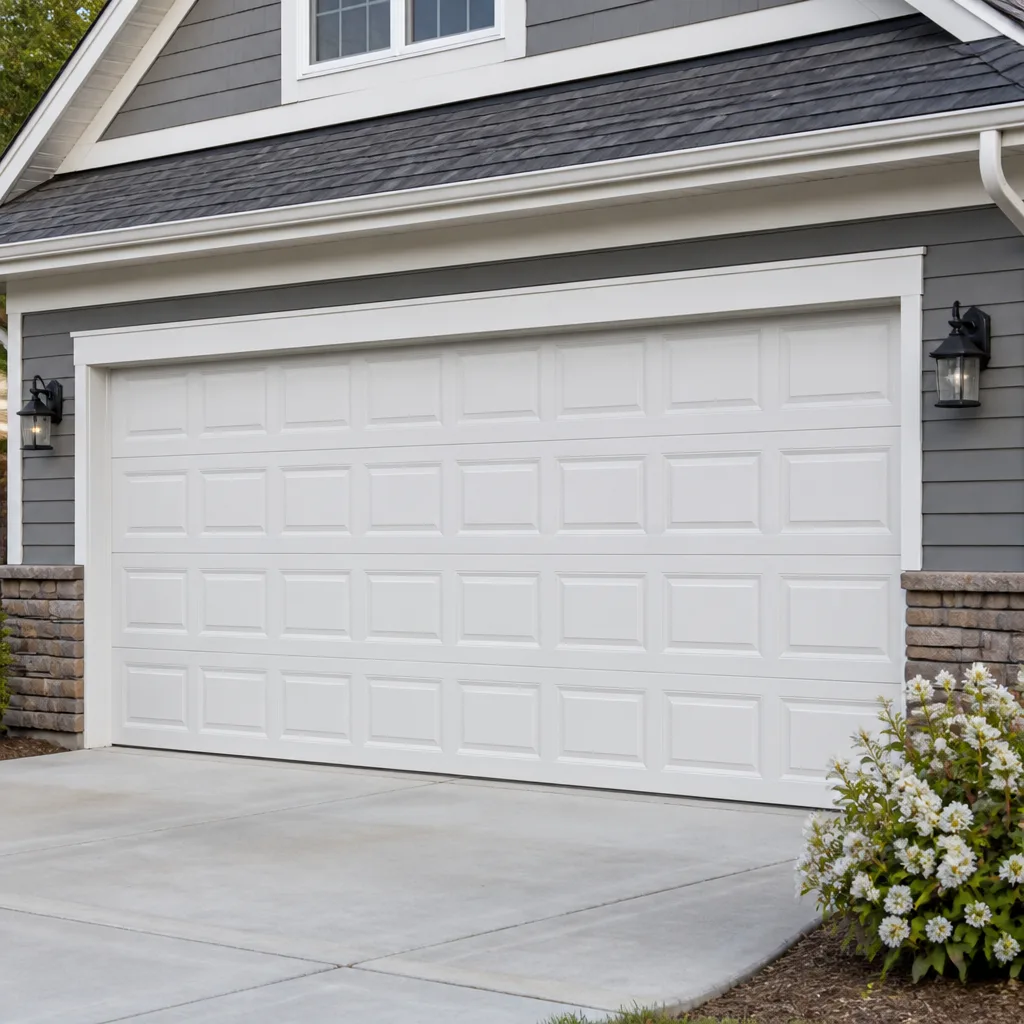 Raised-panel steel
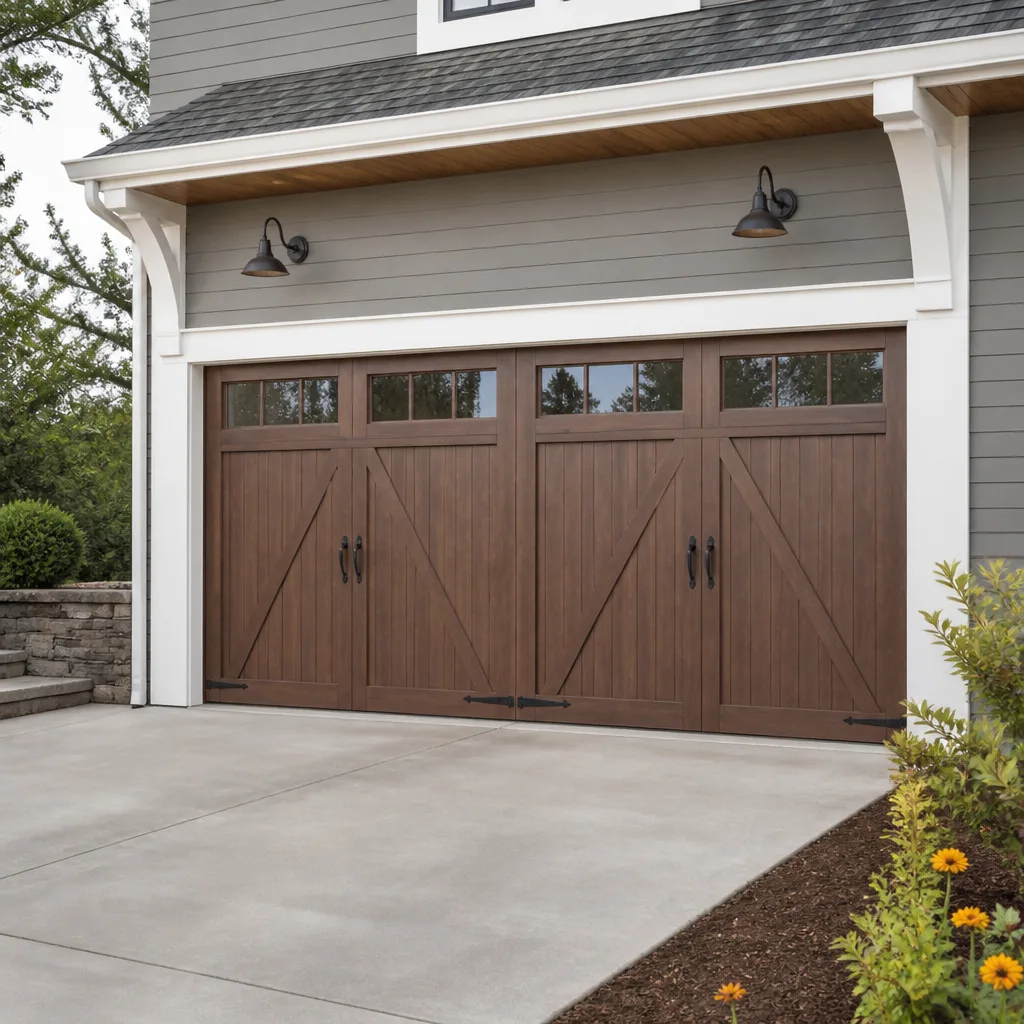 Carriage house
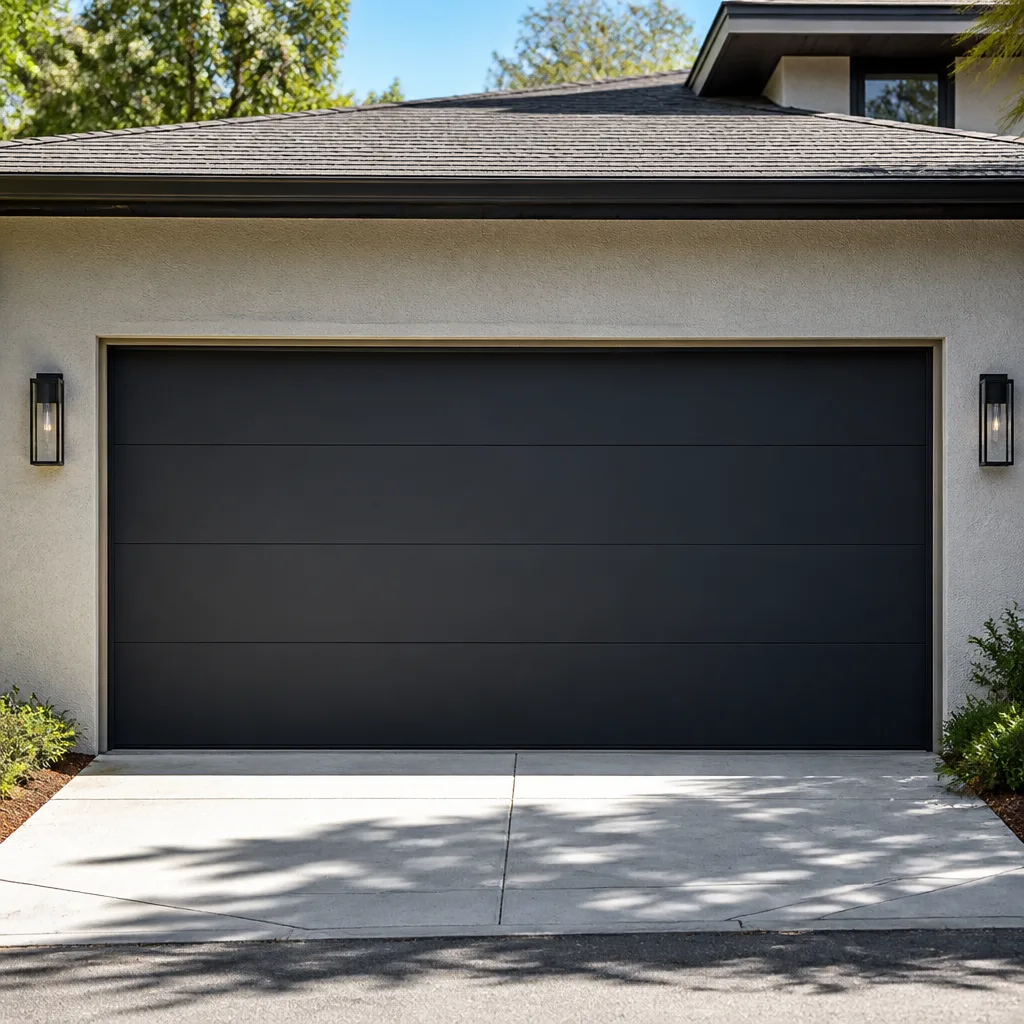 Modern flush
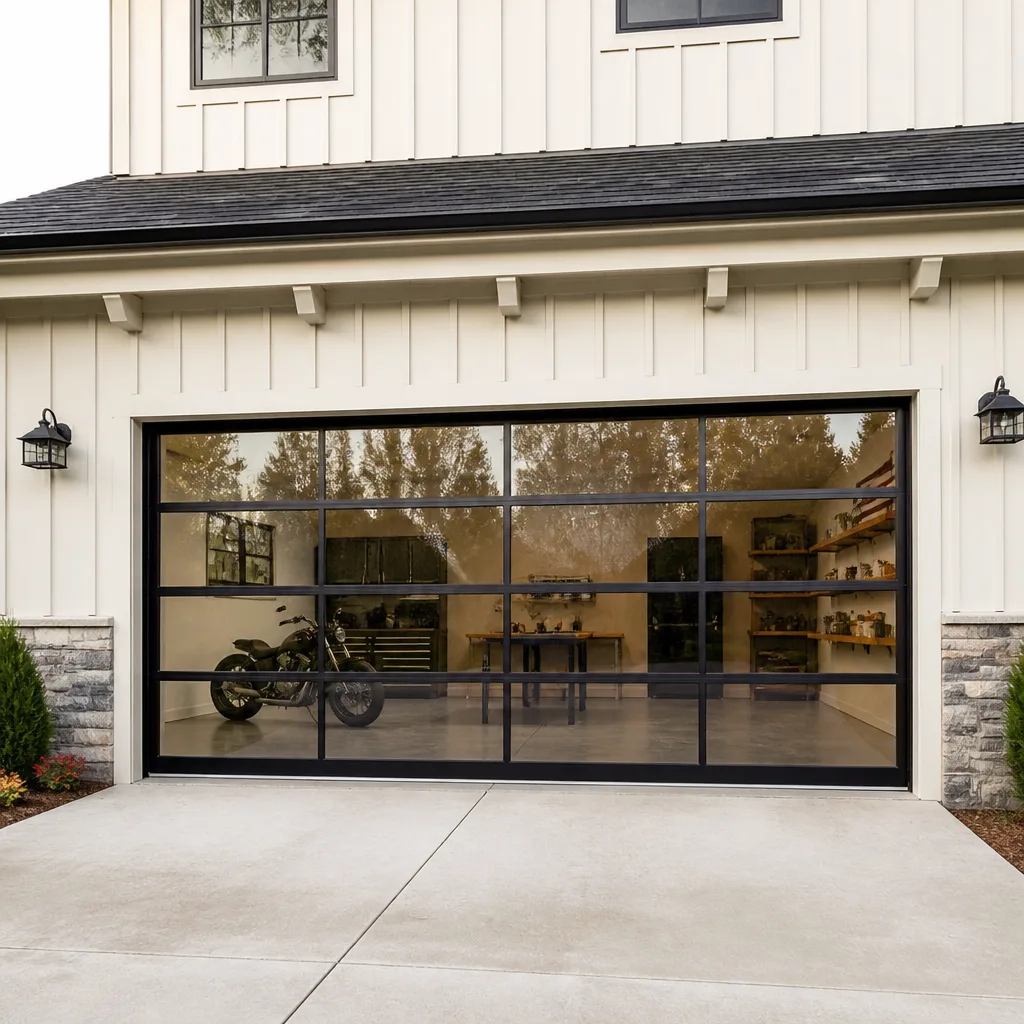 Full-view glass
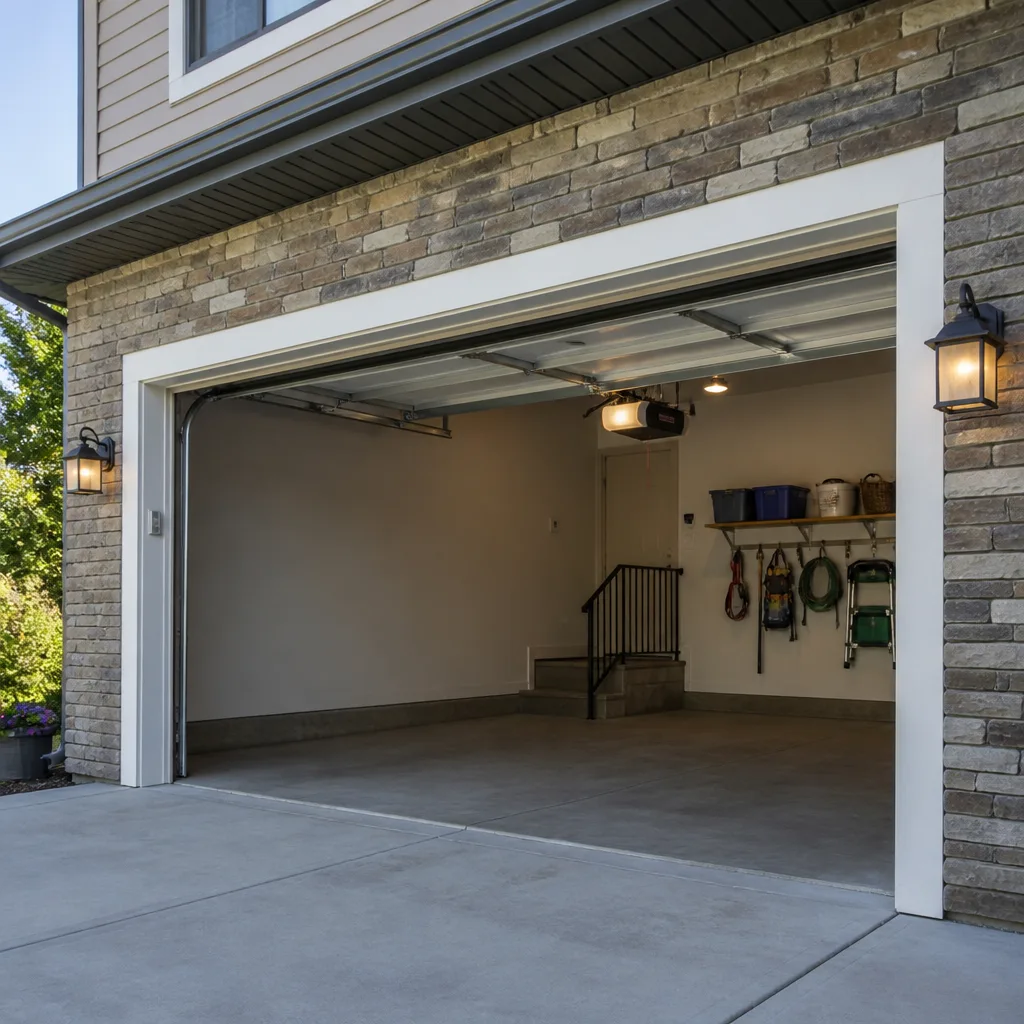 LiftMaster openers
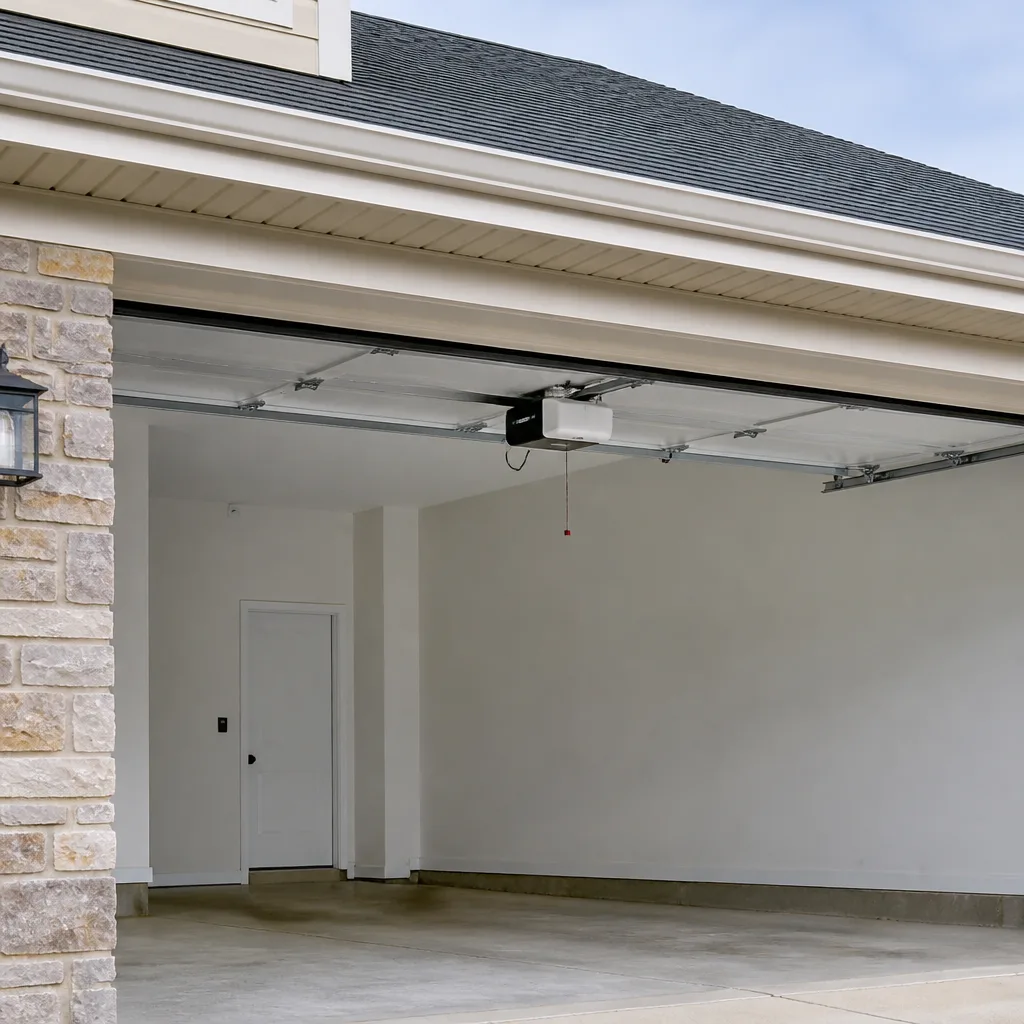 Chamberlain openers
Full 25-point door and opener safety check with every visit - springs, cables, rollers, tracks, and your LiftMaster or Chamberlain opener included
You get a price before we start. It does not change when the pro arrives.
Get your free estimateHow to Hire a Garage Door Contractor in East Village: A Step-by-Step Guide
Most people hire a garage door contractor the way they hire a plumber: they search, they call the first number, they book whoever answers. That works for a leaky faucet. It rarely works for a garage door. When you search for garage door repair in East Village, a good share of the results you see route your call through a national dispatch center before a human who knows the trade ever picks up. On an emergency call, that handoff costs you time you don’t have. This guide walks through how to tell a real garage door specialist from a dispatcher, a generalist, or an out-of-borough crew, what to ask, what to expect on a quote, and the East Village-specific things nobody mentions. Read it before you dial.
Quick Answer
To hire a garage door contractor in East Village, confirm three things before you book: that you’re talking directly to a garage door specialist (not a call center or a handyman who does doors on the side), that they’ll give you a written, line-item estimate before any work begins, and that they understand New York City building access and co-op or condo approval rules. Ask what brands they service and how they diagnose a problem; a specialist answers in specifics, a generalist deflects. Get the price quoted and agreed before anyone touches the door, and confirm who actually shows up.
Styles & brands we work with
- Raised-panel steel
- Carriage house
- Modern flush
- Full-view glass
- LiftMaster openers
- Chamberlain openers
Table of Contents
- Dispatch Center or Direct Hire? How to Tell on the Phone
- What Licensing and Insurance to Confirm in New York City
- Questions That Reveal Whether They Know Garage Doors
- How to Evaluate a Garage Door Quote
- NYC-Specific Red Flags: DOB Rules and Co-op Approvals
- Why Brand Coverage Matters More Than You Think
- Hiring for an Emergency vs. a Planned Job
- Common Mistakes to Avoid
Dispatch Center or Direct Hire? How to Tell on the Phone
The first filter in hiring a garage door contractor in East Village happens in the first thirty seconds of the call. National lead-generation networks and franchise models often advertise under local-sounding names, then route your call to a call center that dispatches whichever subcontractor is available. That isn’t automatically bad, but it means the person on the phone can’t tell you who’s coming, what they know, or when. A direct-hire specialist can. Here’s how to separate the two quickly.
Ask a simple question: “Can you tell me the name of the technician who’ll be coming, and roughly when?” A dispatch center often can’t. They’ll say “sometime today” or “we’ll text you.” A direct specialist either knows or gives you a clear window based on real scheduling.
Then ask, “What brands do you work on?” A dispatcher reads from a script and may list everything or nothing. A specialist names specific systems. We work on the brand already in your garage, across LiftMaster, Chamberlain, Genie, Clopay, Amarr, Wayne Dalton, Craftsman, and Raynor, and we can tell you in a sentence whether your opener or door is one we handle daily.
Watch for these signals on the call:
- Scripted opening. If the first line is “Thank you for calling, how can I help you today?” followed by a pause while they look up your area, that’s a call center rhythm.
- No diagnostic questions. A specialist asks what the door is doing: is it stuck open, closed, making noise, off its track, or is the opener running but the door not moving? A dispatcher just books a slot.
- Vague pricing. If you ask what a spring repair typically runs and they won’t give a range or say “the tech will tell you,” that’s a red flag. A specialist will give you a ballpark and then a firm written number after seeing it.
- No local knowledge. Ask about access: “It’s a walk-up building, no elevator, second floor.” A local specialist knows what that means for the job. An out-of-borough crew may not.
The dispatch model isn’t inherently dishonest, but on a garage door it adds a step between your problem and the person who can fix it. For routine work, that step is an inconvenience. For an emergency, it’s the difference between a door secured today and a door open overnight.
What Licensing and Insurance to Confirm in New York City
New York City doesn’t hand out a single, statewide “garage door contractor” license the way some states do for other trades, and that catches homeowners off guard. What you should confirm instead is that the person coming to your door is a vetted local professional who is licensed and insured as their state requires. Ask for proof before work starts, not after. A reputable contractor expects the question and answers it without hesitation.
Here’s what to check, in order:
- General liability insurance. Ask for a certificate of insurance and confirm it’s current. If a technician damages your door, your car, or a neighbor’s property, the insurance is what covers it. A contractor who can’t produce a certificate isn’t one to hire.
- Workers’ compensation coverage. If someone is injured on your property, this protects you. Ask whether it’s in place.
- Business registration. A legitimate contractor operates as a registered business. You don’t need to memorize the paperwork, but a name you can verify is a good sign.
- Written estimate and contract. New York consumer protection rules favor written agreements for home improvement work. Insist on a written estimate that spells out the scope and price before anything is touched.
Any licensing or insurance claim should describe the vetted local professional performing the work, so ask directly: “Is the person coming to my building licensed and insured as required?” A clear yes, with a certificate to back it up, is what you’re after.
One more thing: ask whether they’ll work with your building’s management or co-op board if documentation is required for building access. In East Village, where a large share of housing is co-op and rental, a contractor who’s done this before knows the drill and won’t be surprised when the super asks for a certificate of insurance before letting anyone up.
Questions That Reveal Whether They Know Garage Doors
A general handyman can swap a spring or tighten a track and still be out of his depth on a real garage door system. The difference shows up in how someone answers diagnostic questions. These aren’t gotcha questions; they’re the ones a specialist answers without pausing.
“What’s the difference between a torsion spring and an extension spring?” A specialist explains both in plain language and can tell you which your door likely uses based on its size and how it’s mounted. A generalist may hesitate or guess.
“If my opener runs but the door doesn’t move, what are the likely causes?” A specialist runs through the possibilities: a broken spring, a disconnected emergency release, a stripped gear in the opener, a snapped cable, or a door off its track. A generalist names one and stops.
“How do you decide whether to repair or replace a door?” The honest answer weighs the door’s condition, the cost of the repair against replacement, and how the panels, tracks, springs, and opener are holding up together. We’ll tell you honestly whether to repair or replace, and we’ll say so even when the repair is the smaller job.
“What brands do you work on?” This matters because garage door systems are not interchangeable. A technician who knows Genie openers and Clopay doors works differently than one who mostly installs Amarr or Wayne Dalton. We service eight major brands, so we can diagnose and repair whatever system is already installed, without pushing you to switch.
“Do you handle both the door and the opener?” Springs, openers, panels, and tracks are one system. A specialist covers the whole system under one visit rather than sending you to a separate opener company.
“Have you worked in this kind of building before?” In East Village, that means walk-ups, conversions, and buildings with tight alley or courtyard access. A crew that’s parked a truck in a narrow East Village side street before knows what fits.
Ask a couple of these and you’ll know within a minute whether you’re talking to a garage door specialist or someone who does doors among many other tasks.
How to Evaluate a Garage Door Quote
The single best protection against a surprise invoice is a written, line-item estimate. A flat number with no breakdown tells you almost nothing: you can’t compare it to another quote, you don’t know what’s included, and you have no record of what was agreed. A proper quote lists the parts, the labor, and the scope, and it sets the price before work begins.
Here’s the level of detail you should expect. For a spring repair, a quote should separate the springs, the labor, and any hardware. For a door installation, it should itemize the door itself, the tracks, the hardware, the opener if included, and the labor. For a repair, it should say what’s being fixed and what isn’t. If a contractor won’t put it in writing before starting, don’t let them start.
To give you a rough sense of how garage door pricing is usually structured, typical East Village estimates tend to fall in these ranges, though every job is different and the written estimate sets the final price:
| Job | Typical Estimated Range |
|---|---|
| Spring repair (one torsion spring) | $180 – $340 |
| Matched spring pair | About twice the single-spring price, since both are usually replaced together |
| Opener repair | Depends on the part and the opener; quoted in writing after diagnosis |
| Panel or track repair | Depends on the door and panel; quoted in writing after diagnosis |
| Door installation or replacement | Measured, ordered, and quoted in writing before scheduling |
A few things to weigh when comparing two quotes:
- Scope clarity. Does one quote include disposal of the old door or springs and the other not?
- Parts sourcing. A cheap quote may use a generic spring that fails sooner. Ask what brand and grade of part is being quoted.
- Diagnosis. A quote that names the actual cause (a broken spring, a bent track, a failed opener gear) is worth more than a quote that just says “fix door.”
- No pressure. A contractor who pushes you to sign before you’ve read the estimate isn’t one to hire.
When it’s time to book, the price is quoted and agreed before any work starts. That’s the whole point of the written estimate. If the job turns out to be bigger than expected once the door is open and the springs are visible, you should be told before anything else is done, and the new price agreed the same way.
NYC-Specific Red Flags: DOB Rules and Co-op Approvals
Hiring in East Village is different from hiring in the suburbs in ways a national dispatch center won’t know. There are two areas to watch: NYC Department of Buildings (DOB) requirements and co-op or condo board approval.
DOB requirements. Most cities require a permit for certain garage door work, so ask your city’s building department whether a permit applies to your specific job before you book. A contractor who doesn’t know whether a permit is needed, or who tells you to skip it, is a red flag. A specialist knows to ask the question and will help you sort out what’s required.
Co-op and condo approval. Many East Village buildings require board approval before work that affects the exterior or common areas, and some require proof of insurance from any contractor working in the building. A local contractor knows to ask whether your building needs a work order, a certificate of insurance, or a co-op alteration agreement. A crew unfamiliar with NYC building culture can show up unprepared and get turned away at the door, leaving you to reschedule.
A few red flags specific to this neighborhood:
- No familiarity with walk-ups or narrow access. If the crew can’t handle carrying doors and springs through a walk-up or down a tight side street, the job will take longer or go wrong.
- No questions about the building. A specialist asks about access, parking, and whether the building has a super or management contact.
- No awareness of board approval. If they’ve never heard of a co-op alteration agreement, they haven’t worked much in East Village buildings.
- Out-of-borough crews with no NYC parking plan. A crew that’s guessing about parking on a narrow side street will lose time and may push costs onto you.
A good contractor asks about your building as readily as they ask about your door. That’s the difference between a specialist who works in East Village and a generalist passing through.
Why Brand Coverage Matters More Than You Think
Garage door systems are built by a handful of manufacturers, and each has its own parts, quirks, and failure patterns. If your door is a Clopay and your opener is a Genie, a technician who’s only familiar with Amarr or Wayne Dalton is going to be slower and may force the wrong part. That’s why brand coverage is a real hiring criterion, not a marketing line.
Here’s how brand coverage affects what you get:
- Correct parts the first time. A specialist who works your brand knows which spring, cable, or gear fits and sources it correctly.
- Better diagnosis. An opener that fails on a known LiftMaster or Chamberlain model may point to a specific known issue, which saves you diagnostic time.
- No brand-switching pressure. A single-brand installer tends to recommend replacing your whole system to match what they sell. A multi-brand specialist works on the brand already in your garage.
- Honest repair-or-replace advice. When your existing system is one the contractor services daily, they can honestly tell you whether a repair extends its life or a replacement makes more financial sense.
We work across LiftMaster, Chamberlain, Genie, Clopay, Amarr, Wayne Dalton, Craftsman, and Raynor, and our technicians have up to 12 years of experience with those systems. When you call to hire in East Village, ask directly: “Do you service my brand?” A specialist answers yes or no with specifics.
Hiring for an Emergency vs. a Planned Job
Emergency hiring runs on a different clock than a planned job. When your door is stuck open, a car is locked in, or your building isn’t secure, you don’t have time to compare three quotes. You need to know three things fast: who’s answering, who’s coming, and when.
Here’s how to handle the call:
- Confirm you’re talking to a specialist, not a dispatcher. Ask “Can you tell me what’s likely wrong and who’s coming?” quickly.
- Describe the problem clearly. Stuck open, stuck closed, off track, opener runs but door doesn’t move, loud bang from the spring area, or a car trapped inside.
- Ask when someone can be there. We answer 24/7, with fast dispatch from 7am to 7pm, Sunday through Friday. If it’s outside that window, the call is booked into the next opening.
- Ask whether the door is safe in the meantime. If it’s stuck open, ask about securing it. If it’s a broken spring, do not try to operate the door. Springs and cables are under high tension and can cause serious injury; a trained professional is the only safe person to handle them.
- Get the price agreed before work starts. Even in an emergency, you should get the estimate before the repair begins. We won’t touch a door without an agreed price.
For a planned job like a new door, opener replacement, or scheduled service, there’s time to compare. A new door is measured, ordered, and scheduled, so ask for a free measure and a written quote rather than a same-day promise. For repair or emergency work, speed is the whole point. That distinction is worth remembering: not every job can be same-day, and a contractor who promises same-day on a new door installation is overpromising.
Common Mistakes to Avoid
- Calling the first ad without checking who answers. Many local-sounding results are national dispatch centers. Ask “Is this a local specialist?” before booking. If they can’t tell you who’s coming, keep calling.
- Hiring a general handyman for spring work. Springs and cables are the most dangerous part of a garage door. A generalist who tightens a track or swaps a panel is fine; a generalist who guesses at a spring is a safety risk.
- Accepting a flat price with no breakdown. A quote that doesn’t itemize parts and labor leaves you with nothing to compare and no protection against a bigger invoice. Insist on a written, line-item estimate before work starts.
- Skipping the license and insurance question. Ask for proof of insurance and confirm the person coming is licensed and insured as required. In a co-op or condo, you may need this before your building will even let them in.
- Ignoring NYC building access. Walk-ups, narrow side streets, and board approvals are real. A crew unfamiliar with East Village buildings will lose time and may push the cost onto you.
- Assuming a new door can be same-day. Installation is measured, ordered, and scheduled. Promises of same-day installation are a sign to walk away.
- Letting a shortcut slide on safety. If a contractor suggests operating a door with a broken spring, or skipping a permit question, that’s a hard stop. Springs and cables are under high tension, and a trained professional is the only safe person to work on them.
When to Call a Professional
Some garage door problems are worth watching and some are worth calling about right away. Call a professional if the door comes off its track, if a spring breaks (usually a loud bang followed by a door that won’t lift), if the door won’t close or won’t open and a car or a building is affected, if a cable snaps, or if the opener runs but the door doesn’t move. Spring and cable work is genuinely dangerous and should never be a DIY project; the tension in those parts can cause serious injury. A technician who knows the system is the only safe hands for it. For anything affecting security or access in East Village, call right away rather than waiting. Garage Door Repair East Village offers free estimates in East Village, so you can find out what’s involved before you commit. Call (866) 951-2601.
See the difference
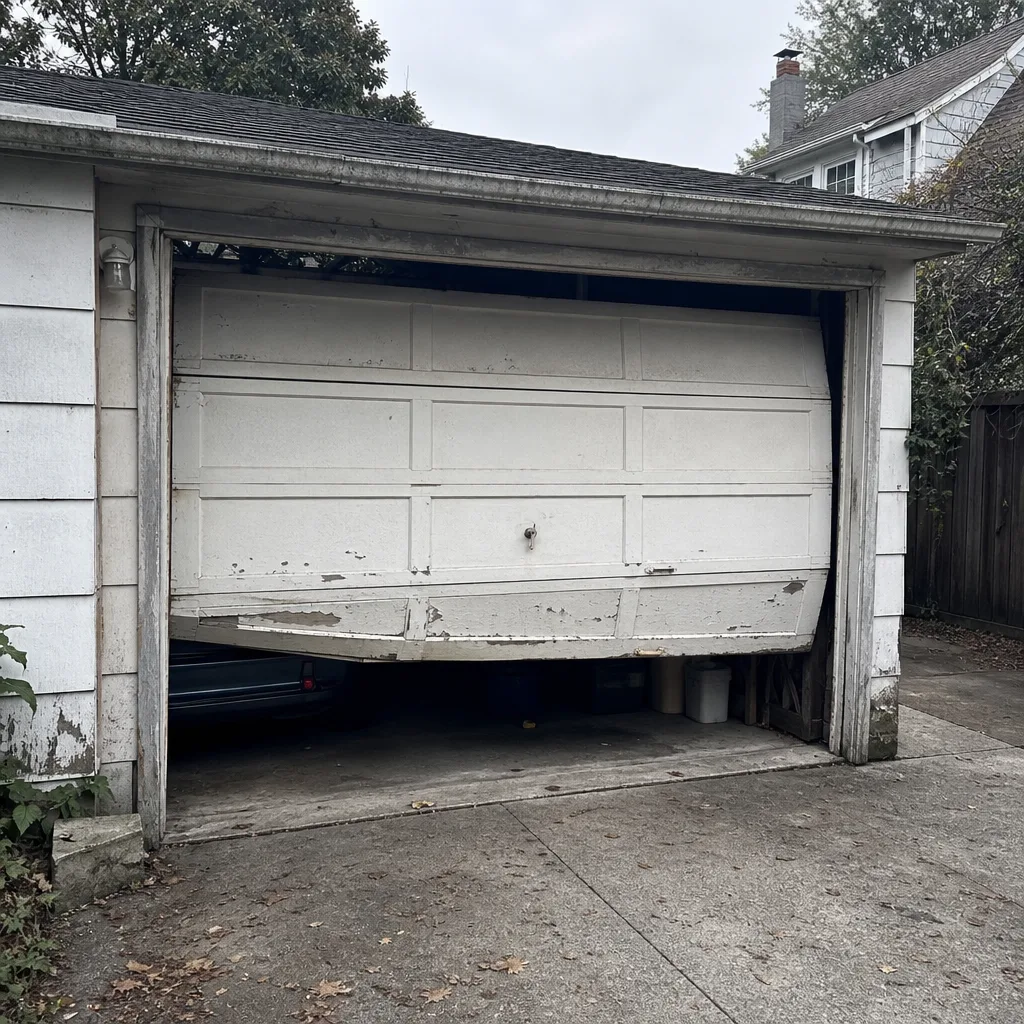 Before
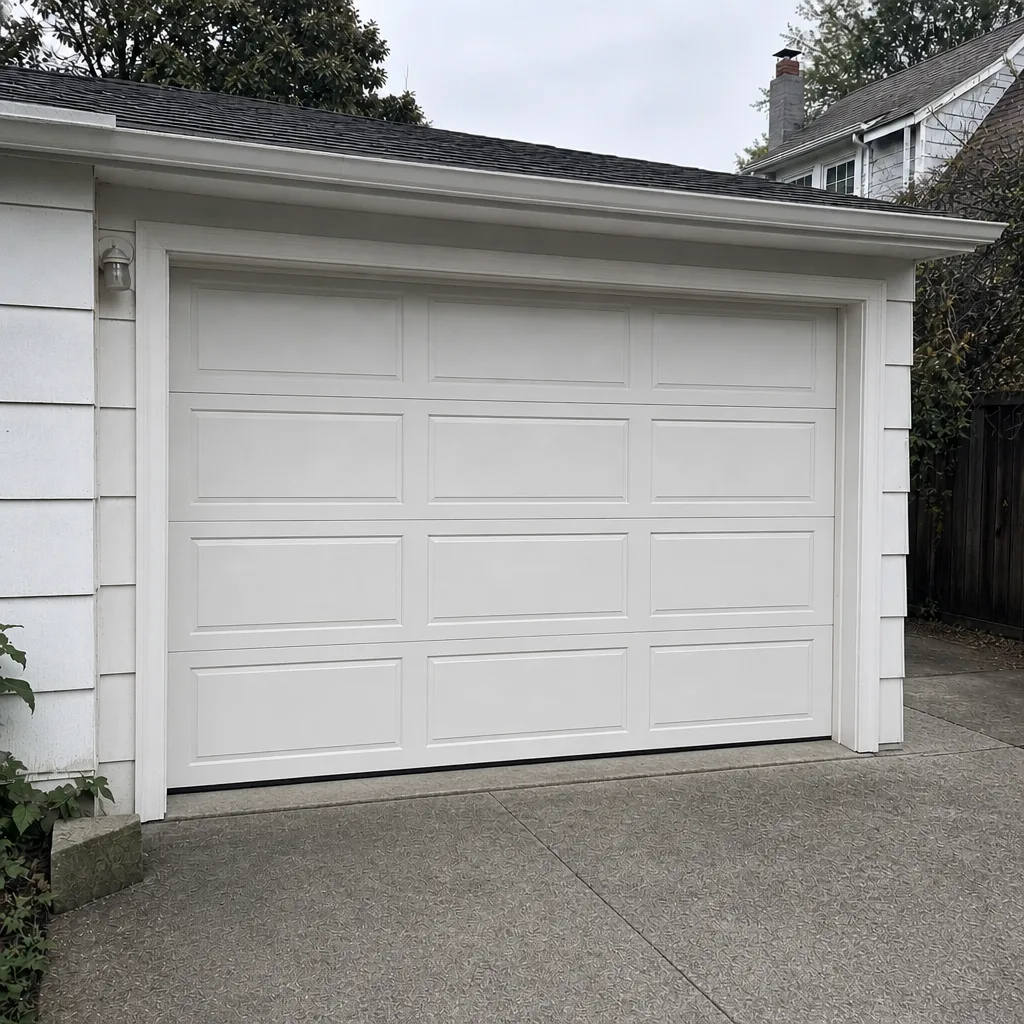 After
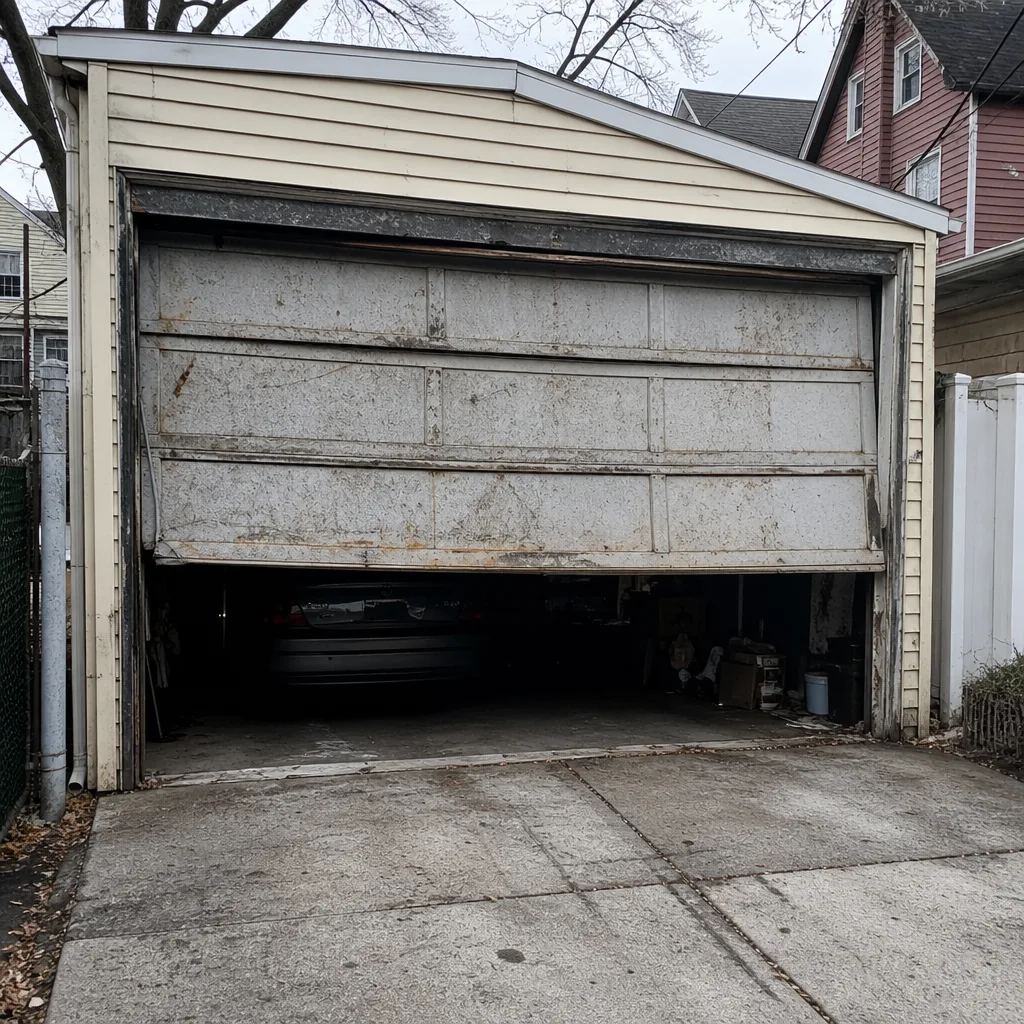 Before
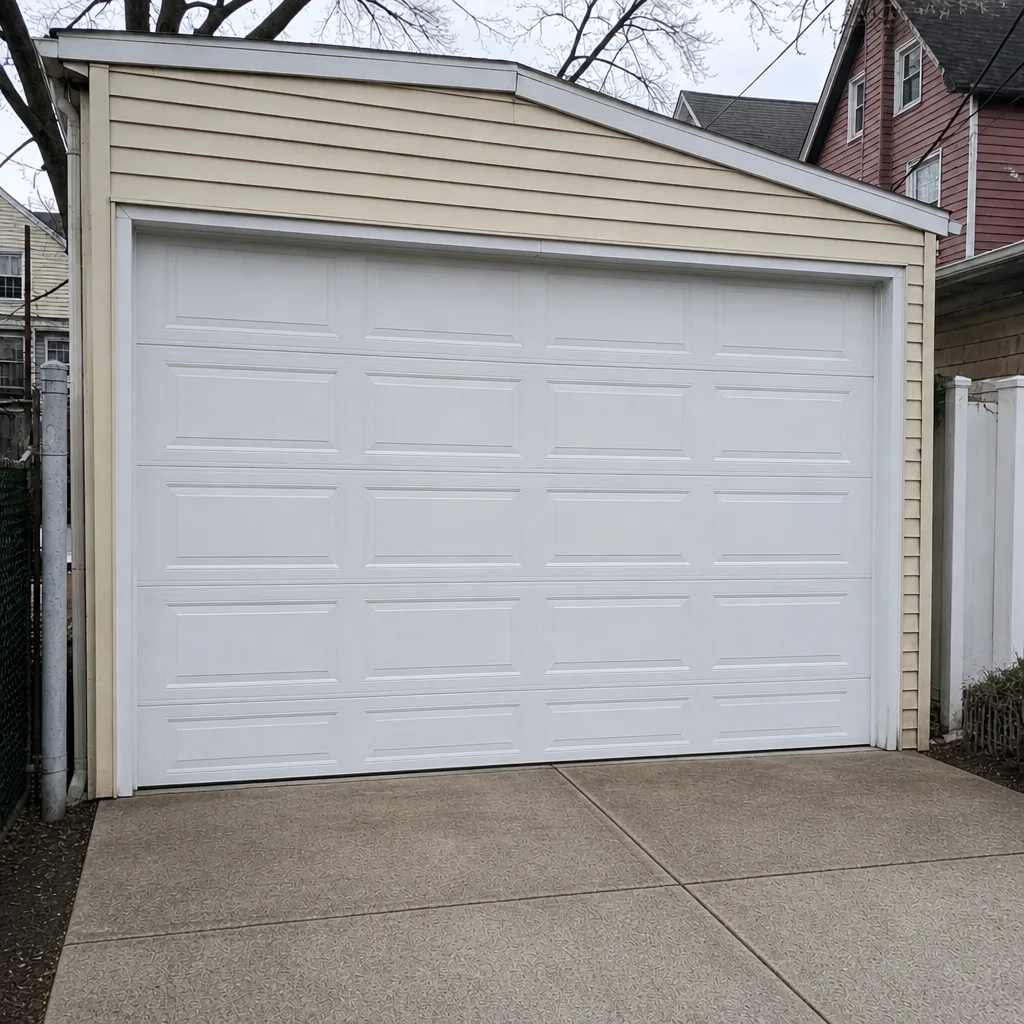 After
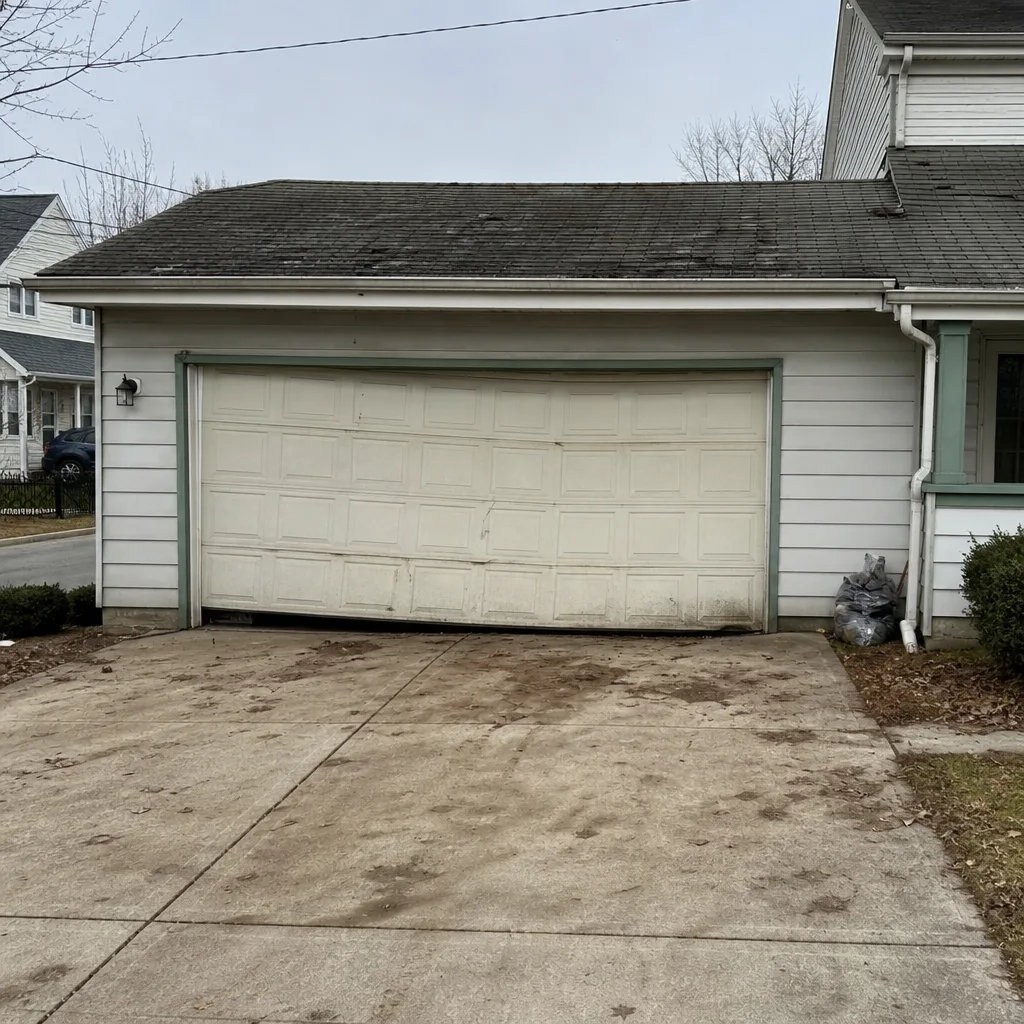 Before
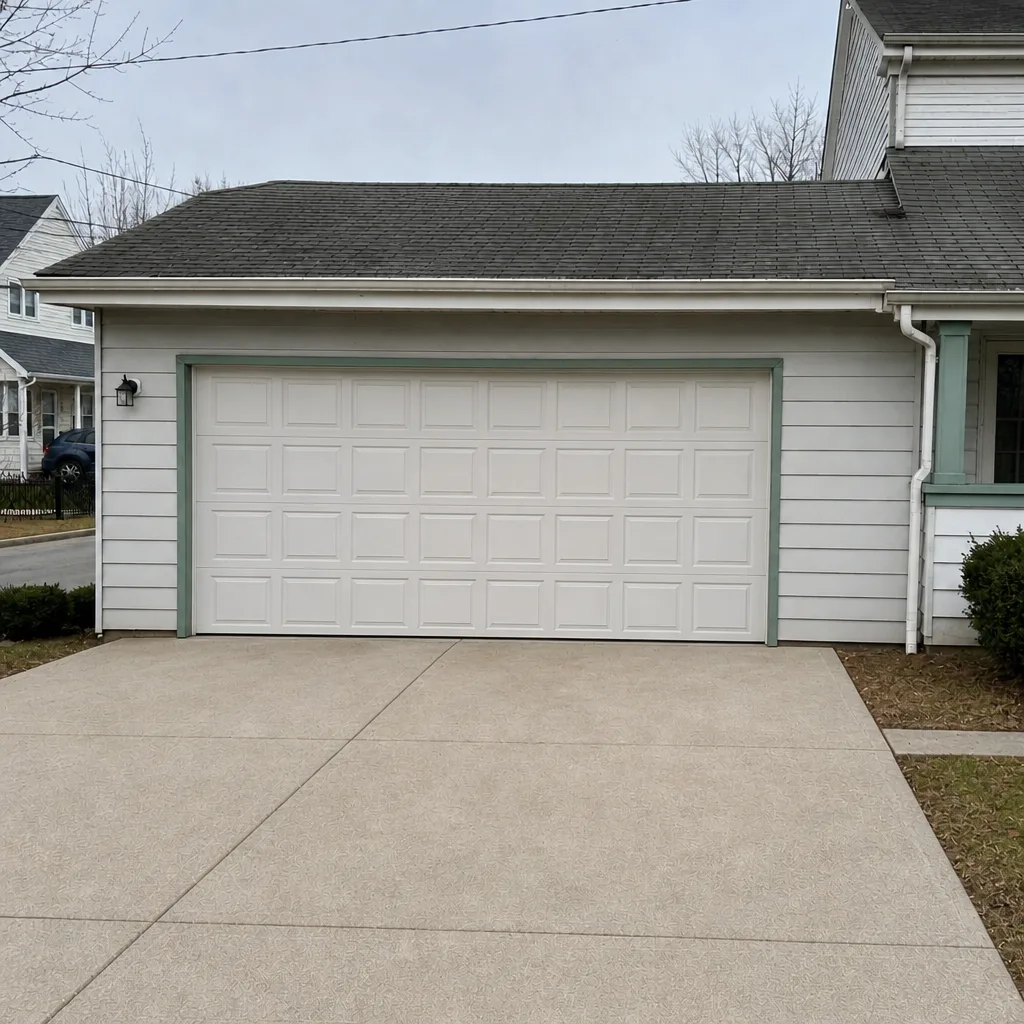 After
Frequently Asked Questions
Ask two questions on the call: “Can you tell me who’s coming and roughly when?” and “What brands do you work on?” A specialist answers both with specifics and asks diagnostic questions about your door. A dispatcher gives a vague window, reads a brand list from a script, and books a slot without knowing the job. Call (866) 951-2601 and we’ll answer both in the first minute.
A written quote should itemize parts and labor, name the actual problem being fixed, and set the price before work starts. For a spring repair, it should separate the spring, labor, and any hardware. For an installation, it should list the door, tracks, hardware, opener (if included), and labor. A flat number with no breakdown tells you nothing. Call for a free estimate and a written quote.
New York City doesn’t issue a single statewide garage door contractor license, so confirm that the local pro coming to your building is licensed and insured as their state requires. Ask for a certificate of insurance and workers’ compensation proof before work starts. A contractor who can’t produce both isn’t one to hire. Call (866) 951-2601 to confirm what’s in place before booking.
For repair and emergency work, yes, same-day response is often possible. We answer 24/7, with fast dispatch from 7am to 7pm, Sunday through Friday. For a new door installation, that’s a measured, ordered, and scheduled job, so expect a written quote and a scheduled date rather than same-day service. Call (866) 951-2601 to find out what’s available for your door.
Possibly. Many East Village buildings require board approval for work affecting the exterior or common areas, and some require a certificate of insurance from any contractor working on-site. Ask your building’s management or super before the crew arrives, and ask the contractor whether they’ve worked with co-op alteration agreements. A specialist knows to ask this up front.
No surprises. The price is quoted and agreed before any work starts. If the job turns out to be bigger once the door is open and the springs are visible, you’ll be told before any additional work is done, and the new price agreed the same way. Call (866) 951-2601 for a free estimate and a written quote.
The Bottom Line
Hiring a garage door contractor in East Village comes down to filtering out the noise. National dispatch centers, general handymen who do doors on the side, and out-of-borough crews unfamiliar with NYC building rules are easy to find and easy to regret. A specialist answers specific questions, works the brand already in your garage, gives you a written line-item quote before starting, and knows what a walk-up, a co-op board, and a DOB permit question actually mean. Springs and cables are dangerous, so the person handling them matters. Call, ask the questions, get the quote in writing, and agree the price before anyone touches the door. When you’re ready to book, Garage Door Repair East Village is here for garage door repair, garage door installation, and garage door opener repair, with free estimates and a written price before work starts.
Contact
Ready to talk to a garage door specialist who’ll give you straight answers and a written quote? Call Garage Door Repair East Village at (866) 951-2601 for a free estimate. We answer 24/7. Fast dispatch from 7am to 7pm, Sunday through Friday. We’re closed Saturday, but if your door fails over the weekend, call and we’ll book you for Sunday. Whether it’s a broken spring, a door off its track, an opener that won’t cooperate, or a new door you’re weighing, we’ll tell you honestly whether to repair or replace, and we’ll quote the price and agree it before any work begins.
Written by the team at Garage Door Repair East Village.